
What is a savings account?
A savings account is a bank or building society product designed to help you set aside money securely while earning interest on your balance. Unlike everyday spending accounts, it prioritises growth and protection over frequent transactions. In the UK, these accounts are essential for building financial stability, especially with inflation at 3.8% in 2025, as highlighted by Moneyfacts trends.
Definition and how it works
At its core, a savings account lets you deposit money that the provider uses for lending or investments, paying you interest in return. This interest compounds over time, meaning earnings generate further earnings. For example, depositing £1,000 at 4% AER (annual equivalent rate, a standard measure of interest) could grow to £1,040 after one year, minus any tax.
You can open one online or in-branch, transferring funds via bank transfer. Withdrawals depend on the account type, but interest is typically calculated daily and paid monthly or annually. According to HSBC UK’s savings guide, most accounts require no debit card, reducing temptation to spend.
Difference from current accounts
Current accounts are for daily use, offering debit cards and overdrafts but little to no interest. Savings accounts, by contrast, restrict transactions to encourage saving, often without chequebooks or cards. This separation helps avoid dipping into reserves for impulse buys.
Current accounts may charge fees for low balances, while savings ones focus on rewards like interest. If you’re searching for a Nationwide savings account or similar, note that these differ from everyday banking by emphasising long-term growth.
Key features like interest and access
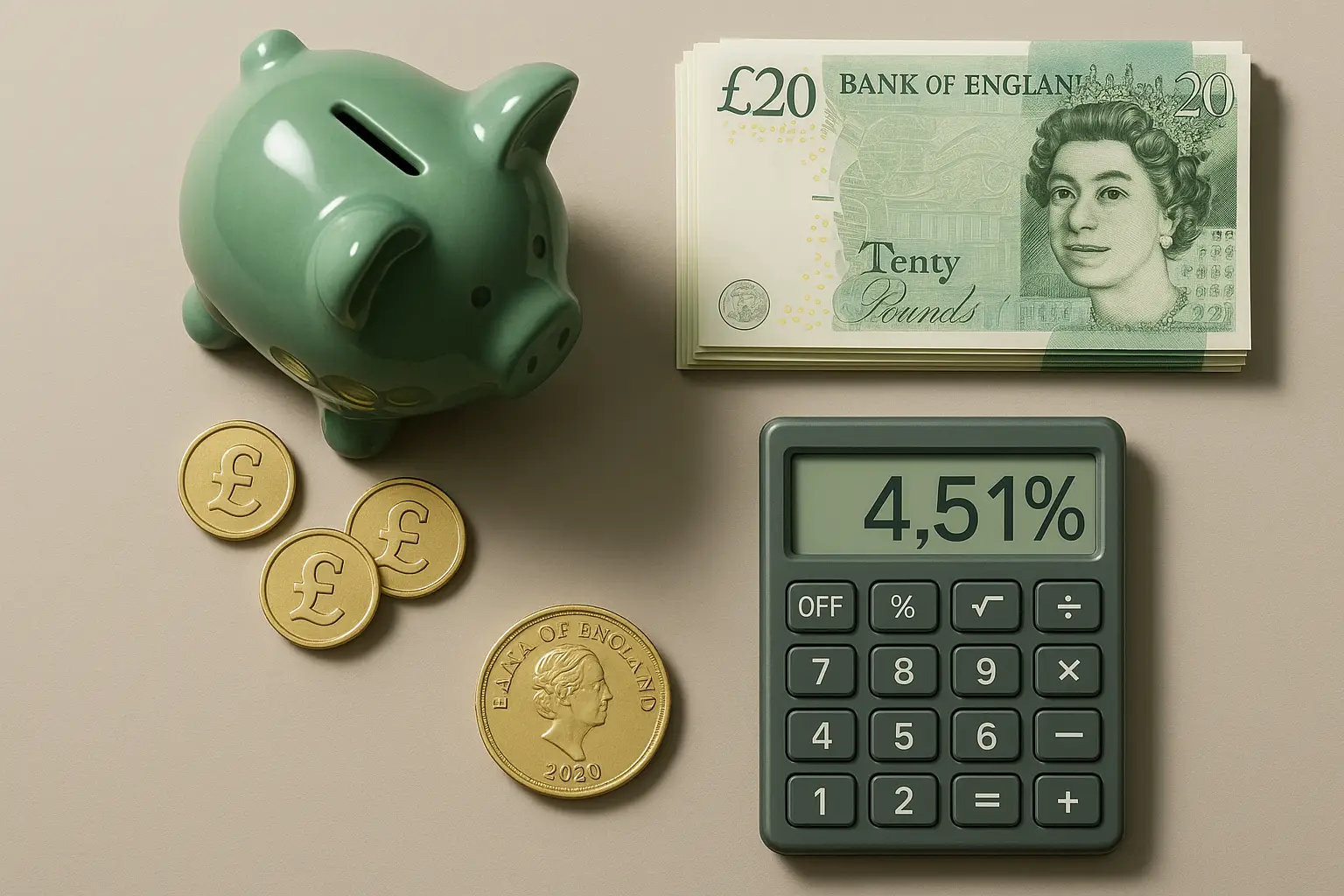
Interest rates vary, with top easy-access options at 4.51% AER in November 2025, per MoneySavingExpert. Access levels range from instant to notice periods, balancing flexibility and returns. Minimum deposits start low, often £1, and the Financial Services Compensation Scheme (FSCS) protects up to £85,000 per person per institution.
Other features include online management and variable or fixed rates. High interest savings accounts UK-wide offer better yields than basic ones, but check for penalties on early withdrawals.
Benefits of having a savings account
Having a savings account provides financial security by growing your money safely, often outpacing inflation to preserve purchasing power. With UK savers holding over £1.2 trillion in 2025, as per Moneyfacts, these accounts are a cornerstone of personal finance. They foster disciplined saving, offering peace of mind against unexpected costs.
Earning interest above inflation
Interest acts as a buffer against rising prices; at 4.51% AER for easy-access versus 3.8% inflation, your money effectively grows. Regular savers hit 7.5%, ideal for consistent deposits up to £500 monthly, according to MoneySavingExpert’s 2025 guide. This beats keeping cash under the mattress, where it loses value yearly.
Over time, compounding turns modest savings into significant sums—£5,000 at 4% could reach £6,833 in five years.
Building emergency funds
Aim for three to six months’ expenses in an easy-access savings account for job loss or repairs. This prevents debt reliance, with 10 million UK users opting for such flexibility. Starting small builds the habit, protecting against life’s uncertainties.
Tip: Automate monthly transfers of £50-£100 to your savings account to build your fund effortlessly without feeling the pinch.
Tax advantages and protection
The Personal Savings Allowance (PSA) lets basic-rate taxpayers earn £1,000 interest tax-free in 2025/26, per GOV.UK statistics. Higher earners get £500. FSCS safeguards your deposit, ensuring safety even if the provider fails.
For tax-free growth beyond PSA, consider Cash ISAs up to £20,000 annually.
Types of savings accounts available
Savings accounts come in various forms to suit needs, from flexible easy-access to locked fixed-term options. Choosing the right type aligns with your goals, whether short-term access or higher yields. Which? outlines these in their June 2025 guide for clear comparisons.
| Type | Access level | Average rate (2025 AER) | Suitability | Pros | Cons |
|---|---|---|---|---|---|
| Easy access savings account | Instant withdrawals | 4.5% | Emergency funds | Flexible; no penalties | Variable rates may drop |
| Fixed-term savings account | Locked for 1-5 years | 4.47% | Long-term saving | Guaranteed rate | Early withdrawal fees |
| Cash ISA (individual savings account) | Easy or fixed | Up to 4.5% tax-free | Tax-efficient growth | No tax on interest | £20,000 annual limit |
- Easy access: Withdraw anytime, rates around 4-5%.
- Fixed-term: Higher rates for commitment, like 4.47% for one year.
- Regular savers: Up to 7.5% for monthly deposits.
Easy access vs fixed-term
Easy-access savings accounts allow immediate withdrawals, suiting liquidity needs, while fixed-term lock funds for better rates but charge penalties for early access. Opt for easy-access if unpredictability looms; fixed for known timelines.
ISAs and child accounts
Cash ISAs shield interest from tax, with £20,000 allowance. Child savings accounts, often easy-access, teach saving young, sometimes with bonuses. Avoid deep dives into kids’ options to focus on basics.
Joint and business variants
Joint savings accounts share ownership for couples, doubling FSCS cover to £170,000. Business savings accounts cater to firms, offering higher rates for larger deposits. These suit shared or professional needs.
Tax rules and HMRC considerations
UK tax on savings interest applies beyond PSA, with HMRC issuing warnings via letters if thresholds breach. GOV.UK’s 2025 statistics stress compliance to avoid penalties. Individual savings accounts (ISAs) bypass tax entirely.
Personal Savings Allowance explained
PSA allows £1,000 tax-free interest for 20% taxpayers, £500 for 40%, and none for 45%, resetting yearly on 6 April. It applies across all savings, not per account. Exceeding triggers income tax on excess.
When interest becomes taxable
Tax kicks in if total interest surpasses PSA; for £10,000 at 4%, £400 is taxable for basic-raters above allowance. HMRC monitors via banks, sending HMRC savings account tax letters for over £10,000 undeclared. Report via self-assessment.
ISA options for tax-free growth
Cash ISAs grow tax-free up to £20,000 yearly, ideal for high earners. Types include easy-access or fixed, mirroring regular accounts but with tax perks. Transfer existing savings to maximise.
How to choose and open a savings account
Select based on goals: liquidity, rate, or tax status. Compare AER, fees, and FSCS eligibility. For the best savings account, factor in your risk tolerance.
Factors like rates and fees
Prioritise AER over headline rates, as it reflects true earnings. Watch for introductory bonuses that lapse, and minimum balances. High yield savings accounts UK options beat inflation but may limit transfers.
Popular UK providers overview
Providers like Nationwide, Monzo, Post Office, NatWest, HSBC, and Barclays offer varied accounts. Nationwide’s easy-access suits beginners; Monzo appeals digitally. Post Office savings accounts provide branch access, while HSBC emphasises global backing. Explore without deep endorsements.
Steps to get started safely
1. Assess needs and budget.
2. Research rates via comparison sites.
3. Check eligibility (age 18+, UK resident).
4. Apply online, providing ID.
5. Transfer funds and monitor.
Verify FSCS protection.
Frequently asked questions
What is a savings account?
A savings account is a secure place to store money while earning interest, distinct from current accounts for spending. It helps grow funds over time through compounding interest, protected up to £85,000 by FSCS. In the UK, with over £1.2 trillion saved in 2025, it’s vital for financial planning against inflation.
How does a savings account work?
You deposit money, and the bank pays interest based on your balance and the AER rate. Interest accrues daily but pays out periodically, growing your pot. Withdrawals vary by type; easy-access allows immediate use, while fixed locks funds for higher returns, as explained in HSBC’s guide.
What are the benefits of having a savings account?
It builds wealth via interest, often above 4% in 2025, beating inflation and funding emergencies. Tax perks like PSA reduce liabilities, and FSCS ensures safety. Ultimately, it promotes discipline, turning spare cash into a safety net for goals like buying a home.
Are savings accounts safe in the UK?
Yes, FSCS protects up to £85,000 per person if the provider fails, covering major banks like NatWest or Barclays. Choose authorised institutions via the FCA register. While rates fluctuate, the principal is secure, making UK savings accounts a low-risk option amid economic uncertainty.
How much interest can I earn on a savings account in 2025?
Easy-access rates reach 4.51% AER, while regular savers offer up to 7.5% for limited deposits, per MoneySavingExpert. Earnings depend on balance; £10,000 at 4.5% yields £450 yearly pre-tax. Compare high interest savings account UK options, but note variable rates may change with Bank of England policy.
Do I pay tax on savings interest?
Interest is tax-free up to your PSA—£1,000 for basic-rate taxpayers in 2025/26. Excess is taxed at your income rate, with HMRC notifying via letters if undeclared. Use ISAs for unlimited tax-free growth within allowances, avoiding surprises as per GOV.UK rules.
What is the best savings account UK for beginners?
For newcomers, an easy-access account from providers like Monzo or HSBC offers flexibility and rates around 4%, with no fees. It builds habits without locks, protected by FSCS. Start with low deposits; for tailored picks, review current top rates to match your needs.