

Cash ISA vs stocks and shares ISA: Which is right for you?
When comparing a cash ISA vs stocks and shares ISA, the main choice comes down to your need for security versus potential growth. A cash ISA offers guaranteed returns with low risk, ideal for short-term savings, while a stocks and shares ISA provides higher long-term potential but with market volatility. In 2025, with the ISA allowance at £20,000, understanding these differences helps you build tax-free wealth suited to your goals (source: GOV.UK).
What is a cash ISA?
A cash ISA is a tax-free savings account where your money earns interest like a regular savings account, but without paying income tax on the gains. It works by depositing cash into accounts from banks or building societies, with interest rates varying by provider and account type, such as easy access or fixed-rate options.
How a cash ISA works
You can save up to the annual ISA allowance, currently £20,000 for the 2025/26 tax year, and withdraw funds flexibly depending on the account terms. Interest is calculated daily or monthly and added to your balance, protected by the Financial Services Compensation Scheme up to £85,000 per institution. For more on what is a cash isa, see our guide.
Current rates and providers
As of October 2025, top cash ISA rates reach 4.51% AER (annual equivalent rate, a standard way to compare interest), though rates can fluctuate with Bank of England decisions. Providers like those highlighted on MoneySavingExpert offer competitive options, but always check for fees or restrictions (source: This is Money).
Pros and cons of cash ISAs
- Pros: Low risk, easy access to funds, predictable returns beating inflation in high-rate environments.
- Cons: Lower growth potential compared to investments; rates may not keep pace with rising costs.
Tip: If you’re new to saving, start with a cash ISA for stability while exploring cash isa rates 2025 to maximise your interest.
What is a stocks and shares ISA?
A stocks and shares ISA lets you invest in assets like shares, funds, or bonds within a tax-free wrapper, shielding you from capital gains tax and dividend tax. Unlike cash ISAs, your money is used to buy investments, so the value can rise or fall based on market performance.
Investment options and how it works
You select from platforms offering funds, individual stocks, or ETFs (exchange-traded funds, baskets of assets tracking markets). The £20,000 allowance applies, but you can hold multiple ISAs as long as the total contributions do not exceed it. Returns come from capital growth or dividends, averaged at 7-8% annually over the past 10 years (2015-2025), though past performance is no guarantee (source: MoneySavingExpert).
Risk, returns, and fees
Risks include market downturns, where you could lose money, but diversification reduces this. Platform fees average 4-5%, plus fund charges. For a balanced view on stocks and shares vs cash ISA, Legal & General explains the trade-offs well (source: Legal & General).
Pros and cons
- Pros: Higher potential returns for long-term goals; tax-free growth compounds over time.
- Cons: No capital protection; short-term losses possible, unsuitable for emergency funds.
Core differences between cash and stocks and shares ISAs
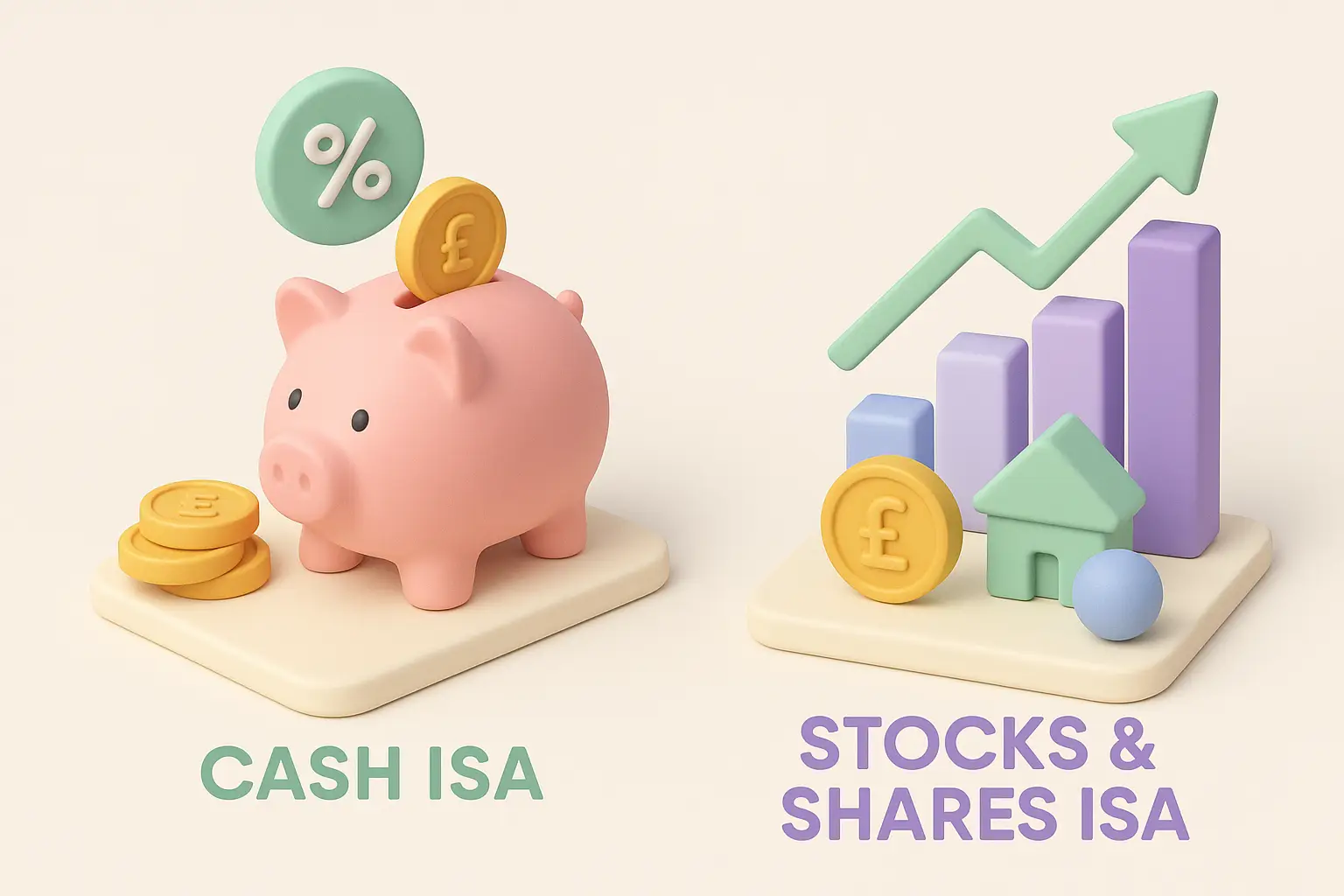
The key divide in cash ISA vs stocks and shares ISA lies in risk versus reward: cash provides stability with fixed interest, while stocks offer growth but with volatility. Liquidity is higher in easy-access cash ISAs, whereas stocks may take days to sell. Both are tax-free via HMRC rules, but stocks shield investment income too.
| Aspect | Cash ISA | Stocks and Shares ISA |
|---|---|---|
| Risk level | Low (FSCS protected) | High (market-dependent) |
| Average returns (2025) | 1-3% after inflation | 7-8% historical annual |
| Fees | Minimal | 0.25-1% platform + fund charges |
| Best for | Short-term savings | Long-term growth |
In 2024, £103 billion flowed into ISAs, with 67% in cash, showing preference for safety amid uncertainty (source: Moneyfacts). A 2025 survey found 60% of cash ISA holders open to switching for better returns (source: Professional Adviser).
Lifetime ISA: Cash vs stocks and shares
A Lifetime ISA (LISA) suits 18-39-year-olds saving for a first home or retirement, with a 25% government bonus on up to £4,000 annually. Cash LISA vs stocks and shares LISA mirrors the standard debate: cash for safety, shares for growth, but withdrawals before age 60 incur a 25% penalty unless for eligible purposes.
Eligibility and bonuses
Both types share the £4,000 LISA allowance within the £20,000 total ISA limit. The bonus incentivises long-term saving, making stocks and shares LISA appealing for home deposits over 5+ years (source: OneFamily).
Junior ISA: Options for children
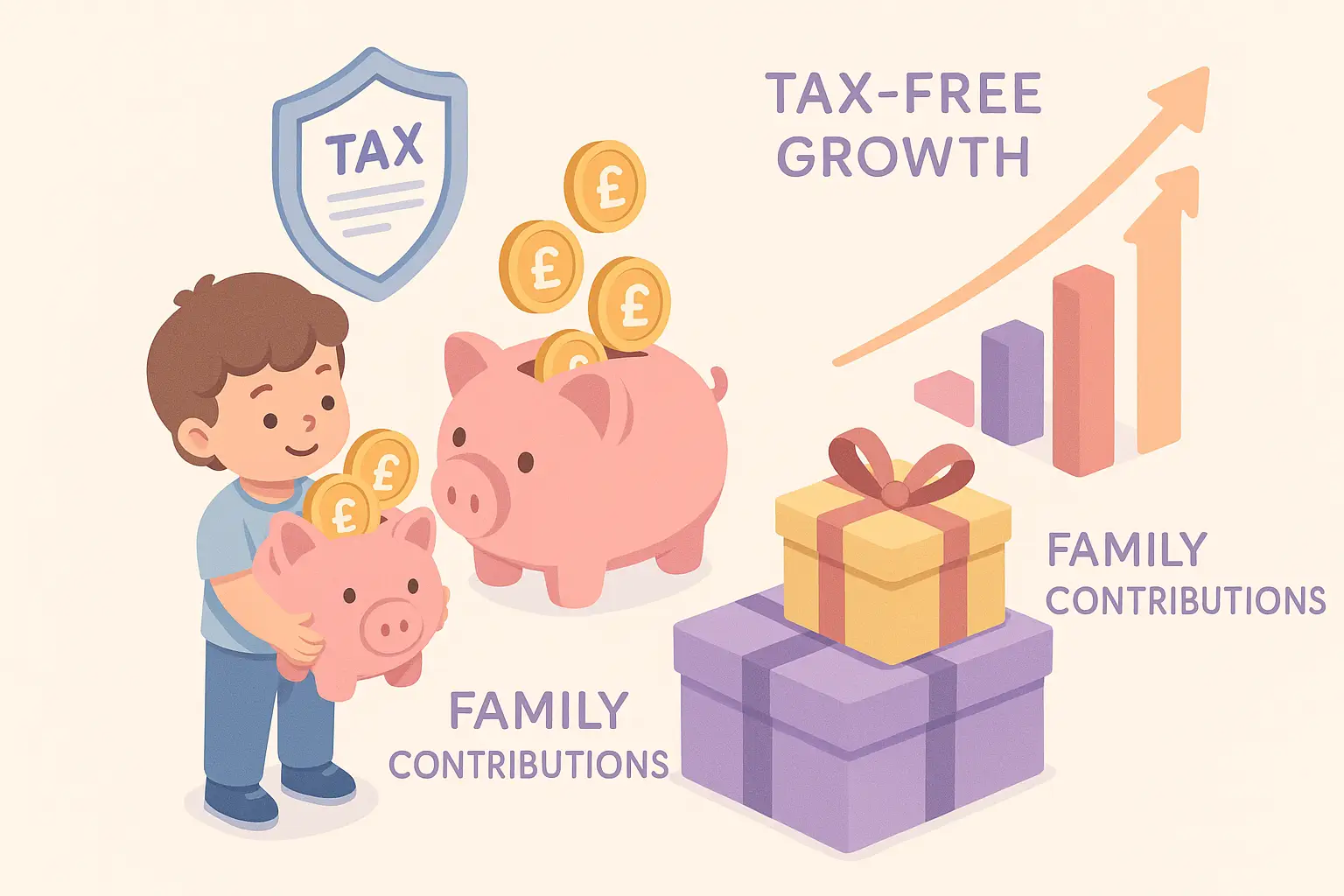
Junior ISAs (JISAs) help parents save for kids under 18, with a £9,000 allowance in 2025. Junior cash ISA vs junior stocks and shares ISA offers secure interest or investment growth, locked until age 18 for tax-free compounding.
Allowance and growth potential
Cash versions yield steady returns, while stocks and shares can build larger pots over 18 years. For child stocks and shares ISA vs child cash ISA, consider time horizon—longer suits riskier options (source: Forbes UK).
Which ISA is right for you?
Choose based on your risk tolerance and timeline: opt for cash if you prioritise capital preservation, or stocks and shares for growth if you can weather ups and downs. A hybrid approach—splitting the allowance—balances both, as many do. Assess goals first, then how to open a cash isa or investment account. For personalised fit, consult a financial adviser.
Frequently asked questions
What’s the difference between a cash ISA and a stocks and shares ISA?
The primary difference in cash ISA vs stocks and shares ISA is how your money grows: cash earns fixed interest in a savings-like account, protected from loss, while stocks and shares invests in markets for potentially higher but variable returns. Both allow tax-free savings up to £20,000 yearly, but cash suits conservative savers needing quick access, whereas stocks appeal to those comfortable with risk for long-term gains. Understanding this helps in deciding based on your financial stability and objectives.
Which is better: cash ISA or stocks and shares ISA?
Neither is universally better; it depends on your situation in the stocks and shares ISA vs cash ISA debate. Cash ISAs excel in low-risk environments like 2025’s 4.51% rates for immediate security, but stocks and shares often outperform over 10+ years with 7-8% averages, per historical data. Beginners might start with cash, while experienced investors diversify into shares to combat inflation.
Can I have both a cash ISA and a stocks and shares ISA?
Yes, you can hold multiple ISAs, including both cash and stocks and shares, as long as total contributions stay under £20,000 per tax year. This allows a hybrid strategy, like parking emergency funds in cash while investing the rest in shares for growth. HMRC rules permit this flexibility, but track subscriptions carefully to avoid over-contribution penalties.
How do Lifetime ISAs compare to standard ISAs?
Lifetime ISAs build on standard cash ISA vs stocks and shares ISA by adding a 25% bonus for first-home or retirement savers, but with withdrawal restrictions. Cash LISA offers safety like a standard cash ISA, while stocks and shares LISA mirrors investment options with growth potential. They’re limited to £4,000 yearly, fitting within the overall allowance, making them ideal for specific goals but riskier if penalties apply.
What are the risks of stocks and shares ISAs?
Stocks and shares ISAs carry market risk, where values can drop due to economic shifts, unlike the guaranteed principal in cash ISAs. Volatility means short-term losses are possible, though diversification and long horizons mitigate this—historical 7-8% returns reflect averages, not guarantees. Always consider your tolerance; if preserving capital is key, stick to cash alternatives.
What’s the ISA allowance for 2025?
The ISA allowance remains £20,000 for 2025/26, covering cash, stocks and shares, Lifetime, and Junior ISAs combined. This tax-year limit (6 April to 5 April) allows tax-free investing without changes announced in recent budgets. Use it wisely by spreading across types for balanced portfolios.
Are junior ISAs different from adult ISAs?
Junior ISAs differ from adult versions in allowance (£9,000 vs £20,000) and access—funds lock until the child turns 18, promoting long-term saving. Like adults, they come in cash or stocks and shares forms, with tax-free growth, but parents manage them. For junior stocks and shares ISA vs cash ISA, the choice hinges on growth needs over 18 years versus stability.