Best Small Condenser Tumble Dryers: UK Buying Guide
- Nyheter
Looking for a small condenser tumble dryer? Compare UK sizes, capacities, prices and compact alternatives before choosing the right machine.

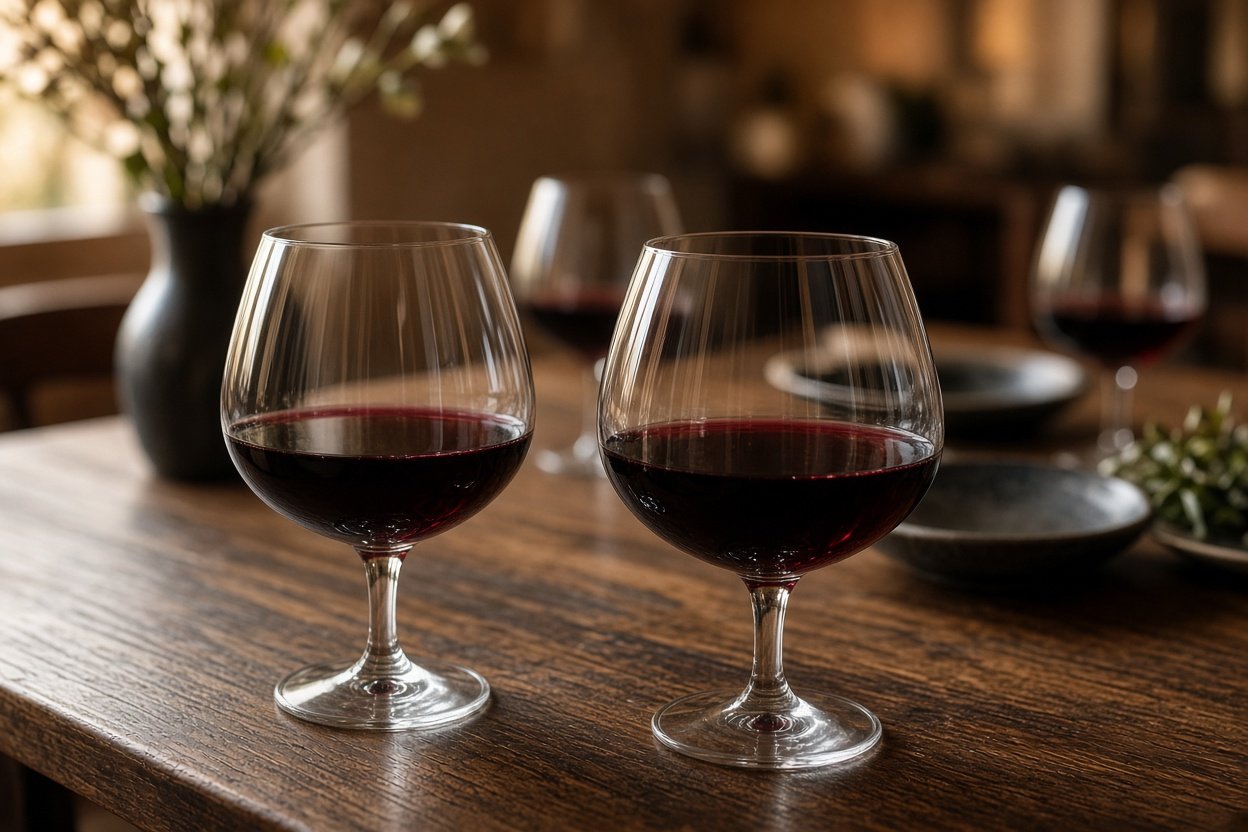

The best red wine glasses have a broad bowl, enough room to swirl the wine and a rim narrower than the bowl’s widest point. This shape gives the wine more contact with air while directing aromas towards the nose. For most buyers, the right choice depends on the wine they drink most often, how many glasses they need and whether dishwasher-safe, crystal or specialist shapes matter more than price.
Full-bodied reds generally suit a taller, broader Bordeaux-style bowl. Aromatic and lighter-bodied reds, including Pinot Noir, are better matched to the wider Burgundy shape. A universal wine glass is the practical compromise when one set must work for several wine styles. The wider explanation of these shapes is covered in our wine glasses shapes and materials buying guide.
These are the strongest choices for different buying priorities. The selection compares the listed price, pack size, shape or intended wine style, and stated construction or care information. It is not a single universal ranking: a specialist Pinot Noir glass will not be the best purchase for someone who mainly serves Cabernet.
| Glass | Best for | Listed price and pack | Useful detail |
|---|---|---|---|
| Dartington Crystal Entertain | Affordable everyday red-wine set | £21 for four | Lead-free crystal, dishwasher-safe, 350ml, wider bowl |
| RIEDEL Extreme Cabernet | Full-bodied reds | £67.50 for four | Designed for the Cabernet style |
| RIEDEL Extreme Pinot Noir | Aromatic Pinot Noir-style reds | £50.63 for four on sale | Displayed list price £67.50 |
| RIEDEL Vinum Pinot Noir | A two-glass specialist purchase | £59 for two | Pinot Noir shape |
| RIEDEL Veloce Pinot Noir/Nebbiolo | Specialist red-wine serving | £93.75 for four | Designed for Pinot Noir and Nebbiolo |
| Schott Zwiesel Ivento Red | A six-glass set | £42 for six | Available through Wineware |
| RIEDEL Extreme Cabernet, pair | Trying a Bordeaux-style shape in a small household | £35.95 for two on sale | Displayed list price £45 |
The Dartington Entertain listing at John Lewis gives the four-glass set’s £21 price, lead-free crystal construction, dishwasher-safe care and wider bowl. For a larger household, Wineware’s red-wine-glass range lists the Schott Zwiesel Ivento set at £42 for six and includes machine-made and mouth-blown options across different pack sizes.
The RIEDEL prices and wine-style descriptions come from the RIEDEL UK red wine glasses collection. The collection lists Extreme Cabernet at £67.50 for four, Extreme Pinot Noir at a sale price of £50.63 for four, Vinum Pinot Noir at £59 for two and Veloce Pinot Noir/Nebbiolo at £93.75 for four. Choose by wine style first, then decide whether the smaller pair or larger set fits your household.
Large red wine glasses are most useful when you want room to swirl a full-bodied wine and release its aromas. A Bordeaux-style glass has the taller, broader bowl commonly associated with full-bodied reds. The extra space also makes it easier to pour a modest serving without filling the bowl too high.
Large does not automatically mean better. A very large bowl takes more cupboard space, can make a four- or six-glass set more expensive and may be inconvenient for everyday washing. Look for a bowl that gives the wine room to move, but avoid choosing capacity alone: the relationship between bowl width and rim shape matters more than the biggest number on the box.
Red wine glasses generally have larger, rounder bowls than white wine glasses. White wine glasses are usually smaller and narrower because white wine is commonly served cooler and needs less aeration. That makes separate glasses useful when you regularly serve both styles.
If cupboard space or budget is limited, a universal wine glass is a sensible compromise. It is designed for people who want one shape for several wine styles rather than separate red- and white-wine glasses. It will be less specialised than a Bordeaux or Burgundy glass, but it can cover ordinary dinners and mixed gatherings effectively.
Holding a stemmed glass by the stem also reduces the chance of warming the wine with your hand. Stemless glasses are available in red- and white-wine shapes, but holding the bowl directly can warm the wine more readily. For red wine served slightly cool, a stem is therefore the more practical design.
Choose a Bordeaux shape for full-bodied, structured reds; choose a Burgundy shape for aromatic, often lighter-bodied reds; and choose a universal glass when flexibility is the main requirement.
For a dinner party where the wine is known in advance, matching the glass to the style is worthwhile. For a mixed collection of Cabernet, Pinot Noir and other reds, universal glasses reduce the need to buy and store several specialised shapes.
Crystal is worth considering when you want a particular finish or a named construction specification, but the purchase should still be judged by shape, care requirements and pack price. The Dartington Entertain set is specifically described as lead-free crystal and dishwasher-safe, combining that material specification with a wider red-wine bowl.
Check the care instructions before buying a premium set. Dishwasher-safe construction is useful for frequent entertaining, while more delicate glasses may demand hand washing. Also compare the number of glasses in the pack: £59 for two specialist glasses and £42 for six everyday glasses represent very different buying decisions, even before shape is considered.
The 20-minute rule means placing a room-temperature bottle of red wine in the refrigerator for about 20 minutes before serving. It is intended as a rough way to cool the wine moderately rather than make it refrigerator-cold. Decanter’s serving-temperature guidance gives 12–13°C for lighter reds and 16–18°C for fuller-bodied reds.
The timing is only a guide. Starting temperature, bottle thickness, air movement and wine style all affect how quickly the bottle cools. Taste the wine after pouring and adjust the next serving time rather than treating 20 minutes as a fixed rule.
A glass with a wide bowl, room to swirl and a slightly narrower rim is the best general design for red wine. Choose Bordeaux for full-bodied reds, Burgundy for aromatic Pinot Noir-style wines, or a universal glass when you want one shape for several styles.
There is no universally perfect red wine glass. The suitable shape depends on the wine, the amount of aeration you want and whether your priority is versatility, specialist performance, durability or price. A universal glass is the most adaptable choice; Bordeaux and Burgundy glasses are more targeted.
Use stemmed red-wine glasses with a larger bowl than a typical white-wine glass. Bordeaux glasses suit full-bodied reds, Burgundy glasses suit aromatic reds, and universal glasses work when you serve different wines from the same cupboard.
A larger bowl can help full-bodied reds by providing room to swirl and allowing aromas to develop. Size should not be the only consideration, however: choose a shape that fits the wine, your storage space and the way you wash the glasses.