How to Choose a Freezer: Types, Sizes and Best Buys
- Nyheter
Choose the right freezer for your home with a UK guide to chest, upright, under-counter and tall models, prices, frost-free features and fit.

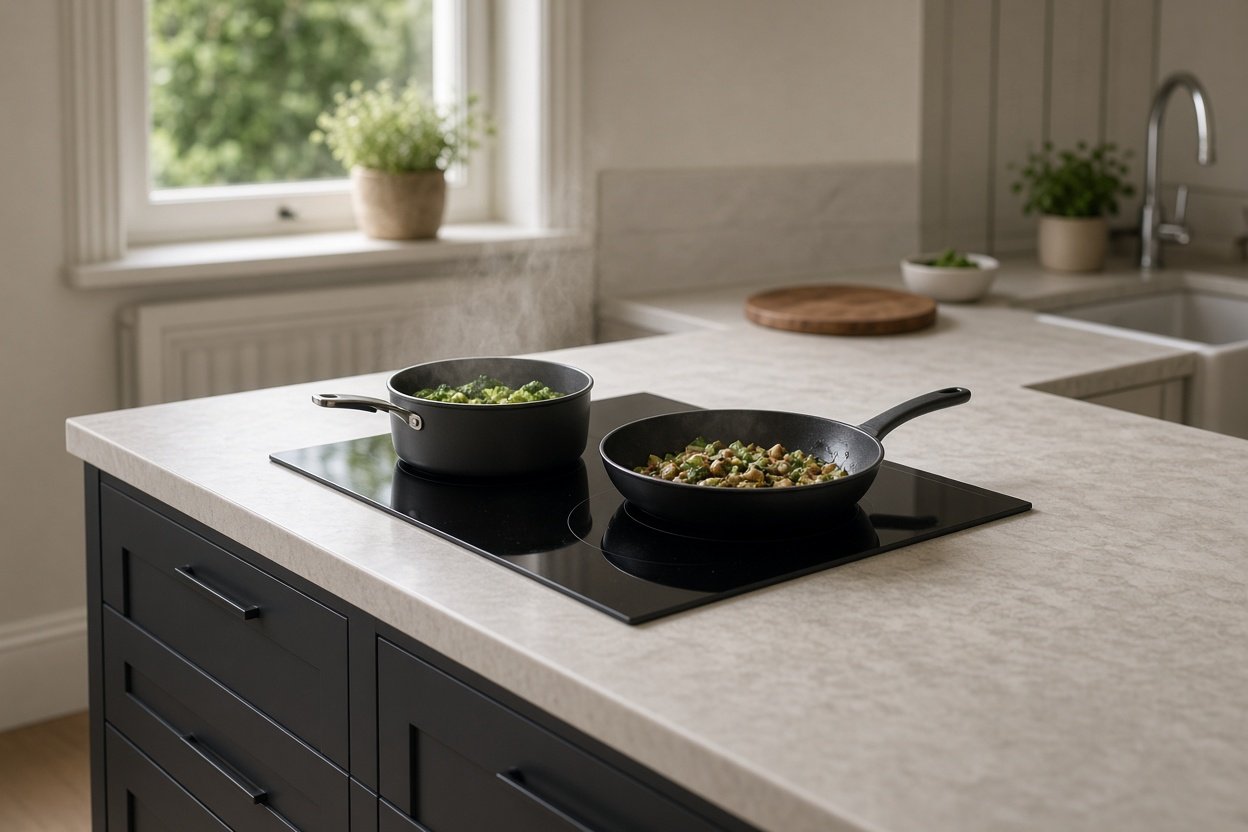

The right electric hob depends on your cookware, installation and cooking priorities. Induction is the strongest choice for speed and energy efficiency, while ceramic is more forgiving with pans and can cost less to buy. Portable induction hobs suit temporary kitchens, extra cooking capacity and smaller spaces.
In UK retail terminology, an electric hob includes both induction and ceramic hobs. Solid-plate models are another electric option, although induction and ceramic dominate most modern built-in-hob searches. This guide compares the types, explains installation, and gives a practical shortlist of models and packages with prices recorded on 9 September 2026.
Choose induction for the fastest, most efficient cooking; choose ceramic for maximum pan compatibility; choose portable induction when you do not want a permanent installation. The table shows the main differences before you narrow down individual models.
| Hob type | How it heats | Best for | Main compromise |
|---|---|---|---|
| Induction | A rapidly changing magnetic field generates heat in the pan | Fast cooking, efficient heat transfer and easy cleaning | Requires pans containing magnetic material |
| Ceramic or radiant | Electrical elements beneath the glass surface heat the pan | Households wanting to use any cookware | Slower than induction in Which? testing |
| Solid plate | Electric heating elements warm solid cooking plates | Simple electric cooking | Less closely associated with modern flat-glass designs |
| Portable induction | Induction heating in a countertop unit | Renters, occasional use and extra hob capacity | Fewer zones and less integrated worktop appearance |
A flat induction or ceramic surface is easier to wipe than a gas hob with pan supports. Ceramic hobs accept all types of cookware. Induction hobs only work with pans containing magnetic material, so place a magnet against the base of each pan before buying one.
An induction hob heats the pan directly through a changing magnetic field rather than heating a conventional element first. This is why an induction pan must contain magnetic material. A magnet that attaches firmly to the base is a practical compatibility check, although the pan should still be suitable for the zone dimensions and the manufacturer’s instructions.
Induction is also the fastest of the main hob types in the Which? comparison supplied for this guide. A large pan of water took an average of 4.57 minutes to boil on induction, compared with 7.60 minutes on electric ceramic and 12.43 minutes on gas. These are averages from hobs tested in 2023, so they are useful for comparing the technologies rather than predicting the exact result in every kitchen.
Induction hobs are more energy-efficient than gas, ceramic electric and solid-plate hobs because heat is generated directly in the pan. Features such as pan detection, a timer, pause controls, PowerBoost and flexible cooking zones can make daily use easier, but they should not replace checking the installation requirements and cookware compatibility.
Induction is better for speed and energy efficiency; ceramic is better when pan compatibility and a lower purchase price matter more. That decision becomes straightforward when you match the technology to your kitchen.
Dual zones are useful where you regularly switch between small and large pans. They let you activate only the inner part of a cooking zone for a smaller pan, which can reduce wasted energy. Touch controls, timers and pause functions are convenient, but the cooking surface, zone layout and electrical connection are more important buying checks.
There is no single best electric hob for every household, but this shortlist covers the most useful buying routes. It is organised by purpose and specification rather than presented as an independent test ranking. Prices are retailer listings recorded on 9 September 2026 and can change.
| Best for | Model or package | Type and key details | Listed price |
|---|---|---|---|
| Built-in induction with strong feature coverage | Bosch Series 4 PIE631BB5E | Four zones, touch controls, PowerBoost, pan detection, timer and 7,400W connection | £427 at AO; £423 for AO members |
| Plug-in built-in induction | Bosch Series 4 PWP611BB5B | 59cm induction hob with an attached plug; described by Currys as requiring no electrician | £349 at Currys |
| Lower-priced built-in induction | Hisense HI6401BSC | 60cm, four zones, touch controls, boost, timer and pause functions | £229 at Currys and Argos |
| Lower-priced built-in ceramic | Bosch Series 2 PKE61RAA8B | 59cm ceramic hob | £229 at Currys |
| Compact single portable hob | CASO Design ProSlim 2000W | 10 power levels, 2-year manufacturer’s guarantee; H2.8 × W29 × D39cm | £59.99 at Argos |
| Portable cooking with two zones | Quest Double Induction Hob 2800W | Two independent zones rated at 1,800W and 1,000W; standard UK mains plug | £79.99 at Argos |
| Complete oven-and-hob purchase | Hisense double electric oven and induction hob package | Package combining a double electric oven with an induction hob | £859 at AO |
The Bosch Series 4 PIE631BB5E is the most fully specified built-in option in this list, but its 7,400W connection and hardwiring requirement make the electrical work part of the buying decision. The Hisense HI6401BSC offers a lower entry price with four zones and useful controls. The Bosch PKE61RAA8B is the ceramic alternative for buyers who want a built-in Bosch hob without moving to induction cookware.
A portable electric hob is the simplest route when you need cooking capacity without changing the kitchen installation. A single-zone unit is compact and relatively easy to store; a double-zone unit gives more flexibility but uses more worktop space and may distribute its available power between zones.
The CASO Design ProSlim 2000W is listed at £59.99 by Argos, reduced from £70, with 10 power levels, a 2-year manufacturer’s guarantee and dimensions of H2.8 × W29 × D39cm. The Quest Double Induction Hob is listed at £79.99 and has two independent zones rated at 1,800W and 1,000W. It plugs into a standard UK mains socket without installation.
“Plug-in induction hob” can describe two different products. It may mean a countertop portable unit such as the Quest, or a built-in 59–60cm hob supplied with a factory-fitted plug, such as the Bosch PWP611BB5B listed by Currys. Check the product dimensions, plug arrangement and installation wording rather than relying on the search label.
Portable induction still requires compatible pans. It is a useful solution for a temporary kitchen, an annexe or extra capacity, but it does not provide the same integrated layout as a four-zone built-in hob.
An oven-and-hob package is worth comparing when you are replacing both appliances at the same time. Packages can simplify compatibility and purchasing, while separate appliances give you more freedom to choose a different hob type, size or brand.
AO’s listed packages included a Hisense double electric oven with induction hob at £859, a Hisense double electric oven with ceramic hob at £469, and a Candy single electric oven with ceramic hob at £449. AO also listed a Smeg Victoria electric single oven and gas hob package at £949, or £909 for AO members.
| Buying route | When it makes sense | What to check |
|---|---|---|
| Induction package | You want an oven and fast, efficient hob in one purchase | Pan compatibility, cut-out dimensions and electrical connection |
| Ceramic package | You want to use existing cookware and keep the package price lower | Zone layout, residual heat indicators and available worktop depth |
| Separate oven and hob | You need a specific oven or want more model choice | Whether the existing circuit and installation suit both appliances |
| Electric oven and gas hob | You prefer gas cooking at the hob while keeping an electric oven | Gas connection, ventilation and the installation requirements of both appliances |
Whether you need an electrician depends on the hob model and the existing installation. Currys describes the Bosch PWP611BB5B as plug-in and requiring no electrician, while AO states that the Bosch PIE631BB5E requires hardwiring by an electrician.
A like-for-like electric hob replacement should still be checked by an electrician before use. This is especially important where the new hob has a high connected load, the existing wiring is unknown, or the replacement changes the appliance type. The Bosch PIE631BB5E, for example, has a 7,400W electrical connection rather than a simple low-power plug arrangement.
Replacing gas with electric is a larger project. The gas line may need to be capped and, in most cases, a dedicated electrical circuit added. Ask the installer to confirm the required circuit, isolation switch, cable route, worktop cut-out and any changes needed before ordering the appliance.
Start with the cut-out and the number of pans you use at once. Common built-in hob widths are approximately 30cm, 60cm, 80cm and 90cm. Bosch’s buying guide illustrates 30cm and 60cm electric hobs, but the visible width alone does not confirm that a model will fit your worktop.
Energy information is covered by UK energy-information regulations for applicable products, including domestic ovens and hobs. Use the product information supplied with the specific model rather than assuming that every hob has an identical efficiency class.
An electric hob can have a high connected load, but its actual electricity use depends on the power level and how long it operates. The Bosch PIE631BB5E is one example with a 7,400W electrical connection. That figure describes the appliance’s connection requirement; it is not a statement of the cost of a typical meal.
Induction uses energy more efficiently than ceramic because heat is generated directly in the pan. Using the correct zone for the pan size can also help avoid unnecessary wasted energy, particularly on a hob with dual zones. A current cost per use or per year cannot be inferred from the connection rating alone because cooking time, settings and the electricity tariff all affect the result.
Keep the installation requirements, cookware and medical-device guidance in view before choosing induction. Induction hobs can interfere with pacemaker settings; Which? cites British Heart Foundation advice to remain at least 60cm from an operating induction hob. Anyone with an implanted medical device should follow the advice of the device manufacturer or clinician.
For daily use, keep the glass surface free from grit before placing pans on it, use cookware that matches the zone, and allow the hob to cool before cleaning according to the manufacturer’s instructions. Ceramic surfaces remain hot after use because the element heats the glass; induction transfers heat to the pan directly but the surface can still become warm from the pan.
The best electric hob is induction for speed and energy efficiency, or ceramic for unrestricted cookware compatibility and often a lower purchase price. There is no universal winner. For a built-in feature-rich option, the Bosch PIE631BB5E has four zones, PowerBoost, pan detection and a timer, while the Hisense HI6401BSC offers four zones and useful controls at a lower listed price. Choose the model that fits your pans, cut-out and electrical installation.
Not always, but a hardwired model requires an electrician and even a like-for-like replacement should be checked before use. Currys describes the Bosch PWP611BB5B as a plug-in model requiring no electrician. AO states that the Bosch PIE631BB5E requires hardwiring by an electrician. The answer therefore depends on the product and the existing wiring, not simply on the fact that the appliance is an electric hob.
Induction is better for speed and efficiency; ceramic is better for pan flexibility. In Which? testing based on hobs tested in 2023, a large pan of water took an average of 4.57 minutes to boil on induction and 7.60 minutes on electric ceramic. Ceramic accepts all cookware, whereas induction needs pans with magnetic material.
They can require a high-power electrical connection, but actual use varies with cooking time and power setting. The Bosch PIE631BB5E has a 7,400W connection, while induction transfers heat directly into the pan and is more energy-efficient than ceramic. A connection rating alone cannot provide a reliable cost per meal or annual bill.