How to open a lifetime isa step by step
- Nyheter
Learn how to open a Lifetime ISA in the UK: eligibility, top providers like Lloyds and Nationwide, cash vs stocks options, and easy online steps to claim your 25% government…

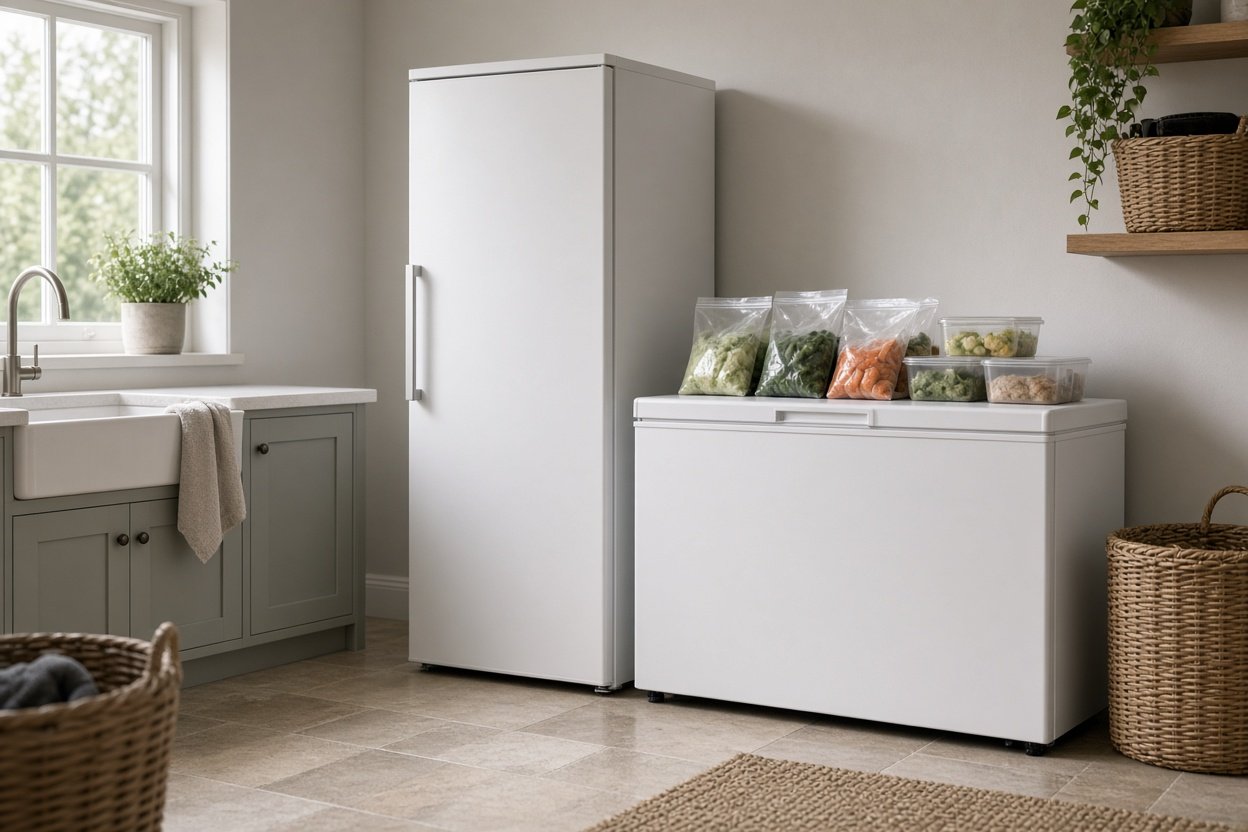

The best freezer depends on where it will go, how you store food and how often you want to defrost it. Choose an upright or tall freezer for organised access, an under-counter freezer when height is restricted, or a chest freezer when bulk storage matters most. If you also need substantial refrigerator space, a fridge freezer may make better use of the available floor area.
Start by measuring the installation space, then choose the freezer type, decide whether frost-free operation matters, check the climate class for the room and compare capacity, price and reliability evidence. This avoids choosing a freezer simply because its headline litre figure looks attractive.
Freezer shape determines how much floor and wall space you need, how easy the contents are to reach and whether the appliance suits a kitchen, utility room, garage or outbuilding.
| Type | Best for | Main advantage | Check before buying |
|---|---|---|---|
| Chest freezer | Bulk buying and bulky food | Large open storage area | Floor area, access to food at the bottom and manual defrosting |
| Upright freezer | Everyday kitchen or utility-room storage | Shelves and drawers make food easier to organise | Door swing, width, depth and internal layout |
| Under-counter freezer | Small kitchens or a limited-height space | Fits below a worktop | Capacity and whether the model is manual-defrost or frost-free |
| Tall freezer | Households needing more vertical storage | More capacity without chest-freezer floor space | Height, ventilation space and delivery access |
| Integrated freezer | A fitted kitchen | Designed to sit behind a cupboard door | Cabinet dimensions, hinge arrangement and installation requirements |
| Fridge freezer | Homes needing both appliances in one footprint | Combines fresh-food and frozen-food storage | The split between fridge and freezer capacity |
Which? says chest freezers are useful for bulky items and bulk buying, but smaller items can become difficult to find in a large one. They are generally less suitable for kitchens and utility rooms because of their floor area, although a suitable model may work in a garage. An upright can also be preferable if bending down into the bottom of a chest freezer would be difficult. Which?’s chest-freezer guidance explains these practical differences.
Choose a chest freezer if your priority is bulk storage and you have enough floor space. Choose an upright freezer if you want drawers or shelves, quicker access to individual items and a conventional kitchen or utility-room layout.
Chest freezers commonly require manual defrosting, while frost-free operation is much more common among upright models. A chest freezer is useful for people who buy large quantities or store bulky food, while an upright is easier to organise for frequent access.
Before choosing a chest model, consider how often you will retrieve food from the bottom. Baskets can help separate commonly used items, but they do not remove the need to lift or move food. For an upright, check the number and arrangement of drawers rather than relying only on the external height.
An under-counter freezer is the practical starting point when the appliance must fit beneath a worktop. Measure the opening, including width, depth and height, and allow the ventilation space specified by the manufacturer. Do not assume that every appliance marketed as under-counter will fit the same cabinet opening.
Currys lists 29 under-counter freezers. Its range includes the Beko UFF4584W, with an 86-litre capacity, manual defrost and a listed price of £169, and the Beko UFF4584S, also with 86 litres but with frost-free operation, fast freeze and outbuilding suitability at £259. The Beko UFS4584W provides 95 litres, manual defrost and outbuilding suitability at £219. The Logik LUF55B23 measures 84.5 × 55.3 × 58cm, has 86 litres of capacity, uses manual defrosting and costs £169.
These examples show why a small freezer should be compared by both dimensions and usable capacity. “Slimline” and “small” are useful search terms, but the actual measurements decide whether an appliance will fit. Check the route into the room as well as the final position: doorways, stairwells and cupboard openings can be more restrictive than the intended space.
A tall freezer is a strong option when you want more frozen storage without dedicating a wide area of floor. Currys lists 23 tall freezers in its range, while Argos lists 23 tall freezers on its tall-freezer category page. Compare height and depth carefully because tall models can be substantially deeper than an under-counter appliance.
The Beko FNE4545S listed by Currys measures 145.7 × 54 × 57.5cm, holds 177 litres and has frost-free operation and fast freeze at £439. The Hotpoint HPMFF 1292 W4UK measures 171.4 × 59.5 × 70cm, holds 256 litres and has frost-free operation and fast freeze at £499. The larger model needs considerably more depth, so the litre figure alone is not enough to establish whether it is suitable.
Check the internal layout before buying a tall freezer. A model with more drawers may suit regularly accessed food, while a simpler layout may be better for large packages. Also check whether the door can be reversed if the freezer will stand close to a wall or another appliance.
Currys’ freezer range lists 109 freezers, including 36 chest freezers, 29 under-counter freezers, 23 tall freezers and 10 integrated freezers. Its listed price bands are £60–£99.99, £100–£499, £500–£999 and £1,000 or more. The retailer also provides filters for dimensions, defrosting method, outbuilding suitability and freezer type.
Argos lists 23 tall freezers, with examples ranging from the Bush ME55TFW23E at £249 to the Hisense KitchenFit FT3K310SAIE at £799. Use Currys when you want a broader category comparison and Argos when comparing its tall-freezer selection and visible model prices. An AO freezer search is another retailer route, but the same checks on format, dimensions, climate class, defrosting and capacity still apply.
There is no single best freezer for every home. The shortlist below selects models for different buying priorities using their listed capacity, features and price. These are fit-based recommendations rather than claims about independent test performance.
| Freezer | Best for | Key specification | Listed price |
|---|---|---|---|
| Logik L95CFW23 chest freezer | Lowest-cost compact chest storage | 96 litres; manual defrost | £99 |
| Logik L145CFW25 chest freezer | Moderate chest capacity | 143 litres; manual defrost; suitable for an outbuilding | £139 |
| Logik L293CFW25 chest freezer | Large storage with flexibility | 293 litres; manual defrost; convertible fridge/freezer operation | £219 |
| Kenwood K280NCFGD25 chest freezer | Large chest storage without manual defrosting | 277 litres; total frost-free; fast freeze | £299 |
| Beko UFF4584S under-counter freezer | Compact frost-free storage | 86 litres; frost-free; fast freeze; suitable for an outbuilding | £259 |
| Beko FNE4545S tall freezer | Vertical storage in a relatively narrow cabinet | 177 litres; 145.7 × 54 × 57.5cm; frost-free; fast freeze | £439 |
| Hotpoint HPMFF 6312 XBR4UK tall freezer | High-capacity upright storage | 286 litres; 186.5 × 59.7 × 70.9cm; frost-free; fast freeze | £569 |
The model specifications and prices come from Currys’ freezer listings and the retailer’s category pages. Retail prices and availability can change, so confirm the product page before ordering.
Choose a fridge freezer when you need both appliances and have limited floor space. Choose a separate freezer when frozen storage is the priority or when you want to place the freezer in a utility room, garage or outbuilding.
The split between compartments varies considerably, so compare fridge and freezer capacity rather than relying on the appliance’s overall size. A combined appliance can offer substantial frozen capacity, but a separate tall or chest freezer may suit a household that already has enough refrigerator space and wants dedicated bulk storage. Currys’ fridge-freezer range is the relevant buying route for this format.
Frost-free is worth prioritising if you want to avoid manual defrosting and regularly open the freezer. Which? says frost-free technology prevents ice from forming and removes the need for manual defrosting; frost-free chest freezers remain uncommon.
Manual-defrost models can still make sense when purchase price and simple bulk storage matter more than convenience. Currys lists the Logik L95CFW23 at £99 with manual defrost, while its Kenwood K280NCFGD25 offers 277 litres and total frost-free operation at £299. Compare the extra cost with the freezer’s capacity and location.
Currys lists 12 total frost-free freezers, 12 low-frost freezers and 62 manual-defrost freezers in its range. A low-frost appliance may reduce ice build-up, but manual defrosting may still be required.
For a garage or outbuilding, check climate class before buying. A freezer intended for a colder location must be suitable for the temperatures it will experience; Which? identifies SN and N classes as relevant to lower ambient temperatures. Also check ventilation, clearance and whether the listing specifically marks the appliance as suitable for an outbuilding.
Currys marks 27 freezers as suitable for outbuildings and 15 with temperature warnings. Treat a temperature warning as a reason to read the full specification rather than assuming that any chest or upright freezer will work in an unheated space.
Measure the position and leave room at the sides, rear and/or top for air circulation. A freezer that physically fits between walls may still be unsuitable if its required clearance is blocked.
Use the refrigeration energy label to compare the freezer compartment’s capacity in litres, but do not use capacity as the only selection criterion. Storage type, access, defrosting method, dimensions, climate class, energy label and reliability evidence all affect suitability.
Currys lists 11 freezers no wider than 53.9cm, 35 measuring 54–58.9cm and 18 measuring at least 90cm wide. It lists 35 models up to 84.9cm high, 42 measuring 85–99.9cm, 12 measuring 100–169.9cm and 10 measuring at least 180cm high.
A penny placed on top of frozen water is a rough indication that the freezer may have defrosted and refrozen during a power cut. If it moves down into the ice or water, the contents may have warmed significantly. It cannot establish whether individual foods are safe to eat. Use the Food Standards Agency’s guidance for UK food-safety decisions.
There is no universally best freezer. Choose a chest model for bulk storage, an upright for easier organisation, an under-counter freezer for restricted height or a frost-free tall model for vertical capacity without manual defrosting. Which? separates recommendations into standard, chest, energy-efficient and garage-freezer categories.
For a typical kitchen, an upright freezer is generally easier to organise and access than a chest freezer. An under-counter model suits a limited-height space, while a chest freezer suits bulk storage where there is enough floor area, such as a suitable garage or outbuilding.
Avoid a freezer that does not fit its space, lacks the necessary climate class for its location, has an unsuitable defrosting method, offers too little usable storage or has weak independent test and reliability evidence. A well-priced freezer can still be the wrong purchase if its depth blocks ventilation or its layout makes food difficult to reach.