
What is a cash ISA?
A cash ISA is a tax-free savings account where your money earns interest without paying income tax on it. It works like a regular savings account but with the added benefit of being sheltered from HMRC taxes, making it ideal for those seeking low-risk preservation of capital. For 2025/26, the ISA allowance remains £20,000, allowing you to save or transfer up to this amount tax-free each tax year, as per official GOV.UK guidance (source: GOV.UK).
Key features include easy access options for everyday use or fixed-term rates for higher returns if you can lock away funds. As of October 2025, top easy access cash ISAs offer up to 4.9% interest, including bonuses, according to Moneyfacts (source: Moneyfactscompare.co.uk). Eligibility requires you to be a UK resident aged 18 or over, with no limit on the number of cash ISAs you can hold, though the total contributions across all ISAs cannot exceed the annual limit.
Tip: Start small If you’re new to ISAs, begin with a cash ISA to build confidence in tax-free saving before considering higher-risk options. Compare rates regularly to ensure you’re getting the best deal.
What is a stocks and shares ISA?
A stocks and shares ISA lets you invest in a range of assets like shares, funds, bonds, and ETFs, all within a tax-free wrapper to avoid capital gains or dividend tax. This makes it suitable for long-term growth, where your money can potentially outpace inflation over time. Like cash ISAs, it falls under the £20,000 annual allowance for 2025/26, and you can hold multiple accounts as long as you stay within the limit (source: GOV.UK).
Investment options vary by platform, from ready-made portfolios for beginners to self-select for experienced investors. Potential returns are variable and historically higher than cash—averaging 5-7% annually for diversified funds—but come with market volatility. Popular providers include Trading 212 and Moneybox, offering low fees for stocks and shares ISA vs cash ISA comparisons (source: Be Clever With Your Cash).
Key differences between cash ISA and stocks and shares ISA
The main distinction in cash ISA vs stocks and shares ISA lies in risk and returns: cash ISAs provide guaranteed, predictable interest with capital protection via the Financial Services Compensation Scheme (FSCS) up to £85,000, while stocks and shares ISAs expose you to market fluctuations where you could lose money. Liquidity differs too—cash ISAs often allow instant access, whereas stocks and shares may involve selling investments that takes days and incurs potential fees or losses if markets dip.
Tax implications are identical: both offer tax-free growth, but cash ISAs suit short-term goals like an emergency fund, and stocks and shares excel for retirement or long-term wealth building. In 2025, with interest rates expected to stabilise around 4-5%, cash vs stocks and shares ISA debates often hinge on your timeline—short-term savers favour cash, long-term investors lean towards stocks (source: MoneySavingExpert).
| Aspect | Cash ISA | Stocks and Shares ISA |
|---|---|---|
| Annual allowance | £20,000 (2025/26) | £20,000 (2025/26) |
| Risk level | Low (FSCS protected) | High (market-dependent) |
| Average returns | Up to 4.9% (Oct 2025) | 5-7% historical average |
| Access | Easy or fixed | Via selling investments |
| Suitability | Short-term savings | Long-term growth |
Pros and cons of each ISA type
Cash ISAs offer stability and simplicity, with pros including full capital protection and steady interest—perfect if you’re risk-averse. However, cons include inflation erosion, as returns may not keep pace with rising prices, potentially costing UK households £500 billion in lost growth over 20 years if staying in cash (source: iNews).
For stocks and shares ISAs, advantages are higher potential returns through diversification—spreading investments across assets to reduce risk—and tax efficiency on gains. Drawbacks involve possible losses during downturns and fees from platforms. Overall, around 15 million adults subscribed to ISAs in 2023/24, with cash leading at 2.1 million new accounts vs 283,000 for stocks (source: GOV.UK, 2025).
- Cash ISA pros: Low risk, easy access, predictable returns.
- Cash ISA cons: Lower growth, inflation risk.
- Stocks and shares ISA pros: Higher potential, diversification options.
- Stocks and shares ISA cons: Volatility, possible capital loss.
Lifetime and junior ISA variants
Lifetime ISAs (LISAs) come in cash and stocks and shares versions, aimed at 18-39 year-olds saving for a first home or retirement, with a 25% government bonus on up to £4,000 annually. In cash LISA vs stocks and shares LISA, the cash option provides safe growth for house deposits, while stocks offer greater accumulation for retirement, though with drawdown penalties before age 60 except for homes.
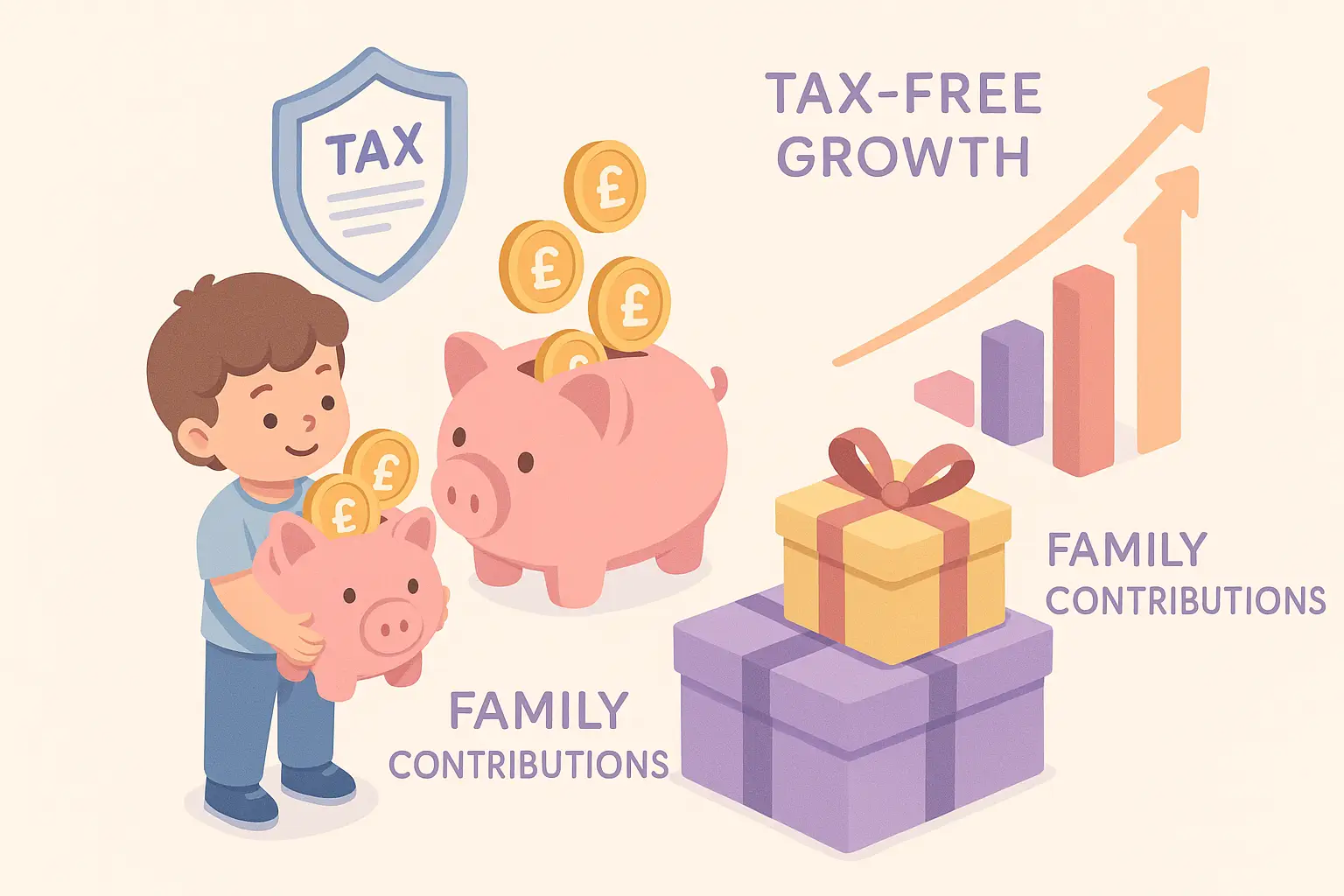
Junior ISAs (JISAs) for children under 18 mirror adult types: junior cash ISA vs junior stocks and shares ISA allows parents to save £9,000 yearly tax-free until the child turns 18. Cash variants suit conservative child savings, but stocks and shares enable compound growth—e.g., for education funds—balancing risk appropriately (source: Forbes UK).
Which ISA is right for you in 2025?
Assess your goals and risk tolerance first: opt for a cash ISA if you need quick access and security, especially with top rates at 4.9% amid economic uncertainty. For long-term horizons over five years, a stocks and shares ISA could provide better growth, particularly with potential 2025 reforms encouraging UK share investments via minimum holdings (source: MoneyWeek).
Consider life stages—young savers might blend both for balance. You can split your £20,000 allowance across types, as explained on best cash isa uk options. For beginners, learn more via what is a cash isa and check cash isa rates.
Frequently asked questions
What is the difference between a cash ISA and a stocks and shares ISA?
The core difference in cash ISA vs stocks and shares ISA is how your money grows: cash ISAs earn fixed interest like a bank account, protected from market dips, while stocks and shares ISAs invest in assets for potentially higher but variable returns. Both are tax-free up to £20,000 annually in 2025, but cash suits short-term needs with low risk, and stocks and shares fits long-term goals despite volatility. Understanding this helps UK residents choose based on their financial timeline and comfort with uncertainty.
Which is better: cash ISA or stocks and shares ISA?
Neither is universally better; it depends on your risk appetite and objectives—in cash ISA vs stocks and shares ISA, cash offers safety with up to 4.9% returns in 2025, ideal for emergencies, while stocks and shares historically outperform for growth over 10+ years. For instance, if inflation is 2-3%, cash may lag, but stocks could double your money with diversification. Consult your situation, perhaps starting with cash if new, and review annually.
Can I have both a cash ISA and a stocks and shares ISA?
Yes, you can hold both a cash ISA and stocks and shares ISA simultaneously, as long as total contributions do not exceed £20,000 per tax year. This allows diversification—cash for security, stocks for growth—common among UK savers managing 15 million accounts. Just ensure compliance with HMRC rules to avoid penalties.
What are the risks of a stocks and shares ISA?
The primary risk in a stocks and shares ISA is capital loss from market downturns, unlike protected cash ISAs, with no FSCS guarantee beyond platform failures. Volatility can mean short-term dips of 20-30%, but long-term diversification mitigates this, aiming for 5-7% average returns. For 2025, economic factors like interest rates add uncertainty, so beginners should allocate only what they can afford to lose.
How do I choose between cash ISA and stocks and shares ISA in 2025?
Evaluate your time horizon and risk tolerance: choose cash ISA for needs within 5 years or if markets worry you, given stable 4.9% rates; opt for stocks and shares for longer goals to beat inflation. Factor in 2025 reforms potentially boosting UK stocks. Use tools from sites like MoneySavingExpert to compare, and consider professional advice for personalised fit.
What about cash lifetime ISA vs stocks and shares lifetime ISA?
Cash lifetime ISAs provide safe, bonus-enhanced savings for home buyers or retirement, with government top-ups, while stocks and shares versions amplify growth through investments for the same goals. Both have £4,000 limits and penalties for early withdrawal, but stocks suit those comfortable with risk for higher long-term yields. In 2025, with housing costs rising, many under-40s blend them for balance.
Is a junior stocks and shares ISA vs cash ISA suitable for children?
For children’s future like education, a junior cash ISA offers low-risk steady growth, while a junior stocks and shares ISA can compound faster over 18 years, potentially turning £9,000 annual saves into much more. Risks are lower since funds are locked until 18, but parental choice depends on aversion to market swings. UK parents often start with cash and switch as the child nears access age.