
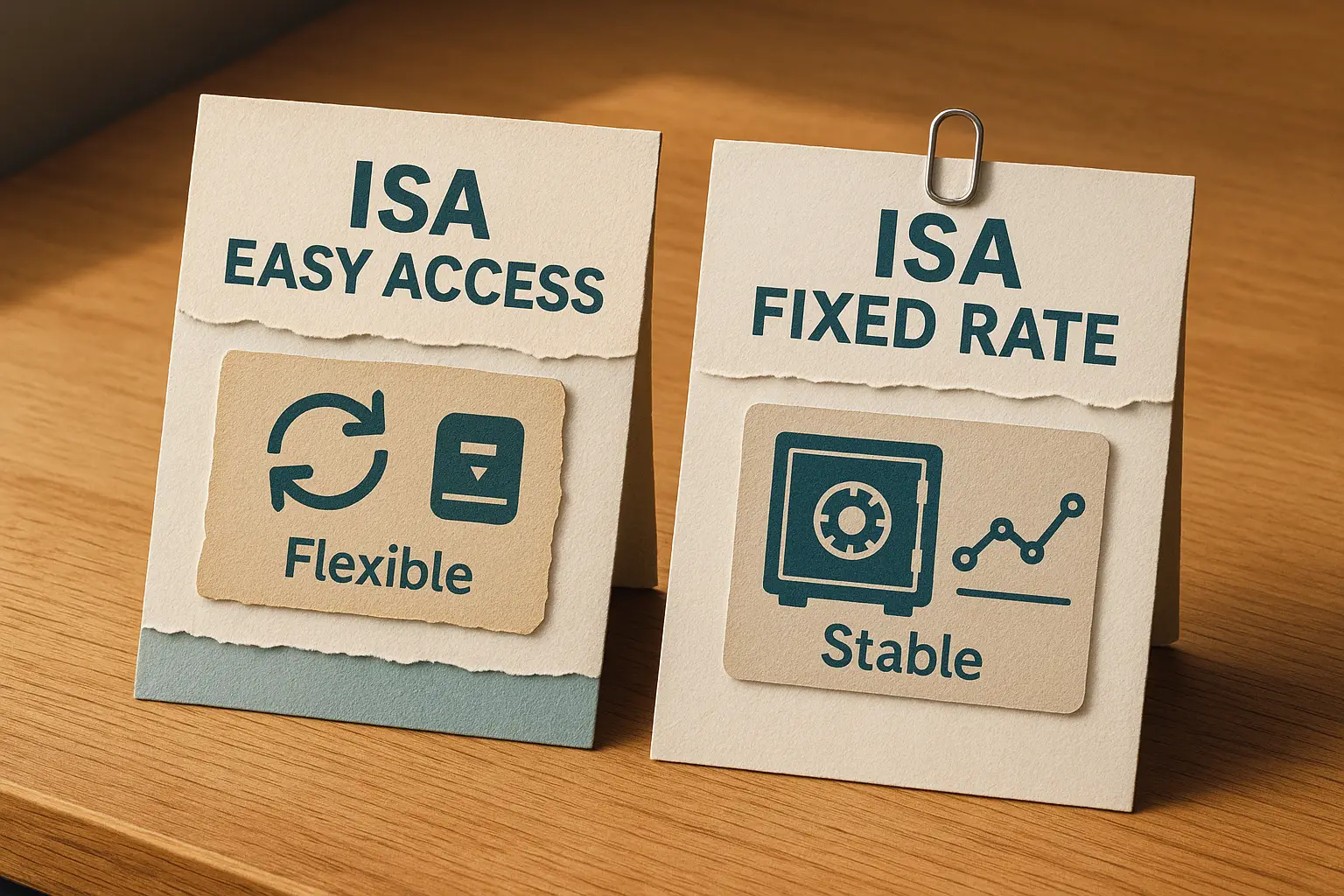

Understanding easy access ISAs
Easy access ISAs offer flexibility for savers who need quick access to their money, with no penalties for withdrawals and variable interest rates that can change with the market. These accounts, a type of Cash ISA, allow UK residents to save up to £20,000 tax-free each tax year, as outlined by HMRC rules (source: Nationwide Building Society, 2025). Interest is calculated daily or monthly and paid annually, using AER (Annual Equivalent Rate) to show the true return.
Definition and key features
An easy access ISA is a tax-free savings account where you can deposit and withdraw funds anytime without losing interest. Key features include variable rates tied to the Bank of England base rate, minimum deposits often starting at £1, and FSCS protection up to £85,000 per provider. Unlike fixed options, rates can rise or fall, making them suitable for uncertain economic times.
Pros and cons
- Pros: Instant access to funds for emergencies; potential for rate increases; easy to open online.
- Cons: Lower average rates (currently 3.2% AER) due to variability; inflation may erode returns if rates drop further.
Best for which savings goals
Easy access ISAs suit short-term goals like building an emergency fund or saving for a holiday, where liquidity matters more than maximising returns. If you anticipate needing cash within 12 months, this option avoids penalties and allows switching to better rates.
Understanding fixed rate ISAs
Fixed rate ISAs lock in a guaranteed interest rate for a set period, providing stability and often higher returns than easy access options, ideal for committed savers. These accounts protect your money from rate falls, but early access comes at a cost, typically up to 365 days’ interest as a penalty (source: Moneyfactscompare, 2025).
Definition and key features
A fixed rate ISA offers a set AER for terms of one to five years, with interest paid annually or at maturity. Deposits are fixed, meaning no additional contributions mid-term, and minimums range from £1,000 to £10,000. All growth remains tax-free within the £20,000 annual ISA allowance.
Pros and cons
- Pros: Predictable returns, often beating inflation; higher rates than easy access for longer terms.
- Cons: Funds are inaccessible without penalties; can’t benefit if market rates rise.
Term lengths and penalties
Common terms are one, two, or five years, with penalties for early withdrawal varying by provider—shorter terms have lower charges. For example, breaking a one-year fixed ISA might cost 90-150 days’ interest, while longer ones could reach 365 days. Always check terms before committing.
Tip: Before choosing a fixed rate ISA, assess your cash flow needs. If unexpected expenses arise, the penalty could wipe out months of interest—consider keeping three to six months’ salary in an easy access account first.
Key differences: Easy access vs fixed rate
The core difference in easy access ISA vs fixed rate ISA lies in flexibility versus security: easy access prioritises liquidity with variable rates, while fixed offers guaranteed returns but restricts access. This trade-off directly impacts suitability for different savings goals.
Interest rates comparison
Fixed rate ISAs typically yield higher rates; the top one-year fixed is 4.28% AER compared to 4.53% for easy access as of October 2025 (source: MoneySavingExpert, 2025). However, easy access rates average 3.2% AER after recent base rate cuts from 5% in 2024 to 4.25% by September 2025, showing fixed’s edge in falling rate environments.
Flexibility and access
Easy access allows unlimited withdrawals without fees, perfect for dynamic needs, whereas fixed rate locks funds, with penalties deterring early exits. This makes easy access vs fixed rate ISA a choice between freedom and commitment.
Risks and returns
Risks for easy access include rate drops outpacing inflation, reducing real returns, while fixed protects against this but risks opportunity cost if rates rise. Both offer FSCS safety, but fixed rate ISA vs easy access highlights higher potential returns at the cost of liquidity.
| Type | Top Rate (AER) | Term | Min Deposit | Pros | Cons |
|---|---|---|---|---|---|
| Easy Access | 4.53% (Plum) | Variable | £100 | Full access | Rates can fall |
| Easy Access | 4.51% (Chip) | Variable | £1 | No penalties | Lower average |
| Easy Access | 4.40% (Chase) | Variable | £0 | App-based ease | Provider limits |
| Fixed Rate (1yr) | 4.28% (Shawbrook) | 1 year | £1,000 | Guaranteed rate | Early withdrawal fee |
| Fixed Rate (1yr) | 4.20% (Investec) | 1 year | £5,000 | Stable returns | No additions |
| Fixed Rate (1yr) | 4.15% (Close Brothers) | 1 year | £10,000 | Competitive yield | Lock-in risk |
Current rates and providers (2025)
As of late 2025, easy access rates lead slightly at up to 4.53% AER, but fixed options provide security amid economic uncertainty. Use comparison sites to find deals.
Top easy access rates
Leading providers offer 4.53% AER, but averages have fallen to 3.2% due to base rate reductions. For the best easy access isa, check daily updates.
Top fixed rate options
One-year fixed tops at 4.28% AER, with longer terms slightly lower. Providers like building societies dominate for reliability.
How to compare and apply
Compare via independent sites like MoneySavingExpert. To open, verify eligibility (UK resident, 18+), then apply online. Learn more on how to open easy access isa or fixed equivalents.
Choosing based on your goals
Match your ISA to goals: opt for easy access if flexibility is key, fixed for growth. Consider tax-free benefits and inflation.
Short-term vs long-term saving
For short-term (under 12 months), easy access avoids penalties; long-term (2+ years) suits fixed for locked-in rates.
Tax implications
Both types shield up to £20,000 annually from tax, ideal for higher-rate taxpayers. No difference in benefits, but fixed maximises compound growth tax-free.
Scenario examples
For an emergency fund of £10,000, choose easy access at 4.53% for access. For a house deposit in three years, fixed at 4.28% secures returns. Align with your what is an easy access isa understanding for basics.
Frequently asked questions
What is the difference between easy access and fixed rate ISAs?
Easy access ISAs provide flexible withdrawals with variable rates around 3.2-4.53% AER, suiting unpredictable needs, while fixed rate ISAs guarantee rates like 4.28% for 1-5 years but penalise early access up to 365 days’ interest. This easy access ISA vs fixed rate ISA contrast balances liquidity against higher, stable returns. Both fall under the £20,000 tax-free allowance, protected by FSCS.
Which ISA is better for short-term savings?
For short-term savings under a year, easy access ISAs excel due to penalty-free withdrawals and competitive top rates of 4.53% AER. They allow responding to life changes without loss, unlike fixed options that lock funds. Consider your risk tolerance—if rates fall, easy access might underperform, but flexibility outweighs this for urgent goals.
How do current interest rates compare for easy access vs fixed ISAs?
In 2025, top easy access rates hit 4.53% AER, edging out fixed at 4.28% for one year, though averages for easy access are lower at 3.2% post-base rate cuts. Fixed rates provide certainty, beneficial if the Bank of England continues easing policy. Always verify latest figures on sites like MoneySavingExpert for accurate easy access vs fixed rate ISA decisions.
Can I switch from a fixed rate ISA to easy access?
Switching involves closing the fixed ISA early, incurring penalties like 150-365 days’ interest, then transferring to an easy access one within ISA rules to stay tax-free. No direct switch without fees, so plan ahead to avoid losses. This process preserves your £20,000 allowance but may reduce overall returns if penalties are high.
What are the tax benefits of each ISA type?
Both easy access and fixed rate ISAs offer identical tax benefits: all interest grows tax-free up to the £20,000 annual limit, shielding basic and higher-rate taxpayers from HMRC charges. Fixed ISAs often compound more effectively over terms, maximising benefits for long-term savers. No differences in perks, but eligibility requires UK residency and one ISA per type per tax year.
What happens if I withdraw early from a fixed rate ISA?
Early withdrawal from a fixed rate ISA triggers penalties, typically 90-365 days’ lost interest depending on term length, potentially leaving your balance unchanged or reduced. Providers must offer this option under FCA rules, but it’s costly—e.g., on £10,000 at 4.28%, a 365-day penalty could cost £400+. Weigh this against needs; better to use easy access for accessible funds.
Are ISA rates guaranteed?
Fixed rate ISA rates are guaranteed for the term, but easy access rates are variable and can change with market conditions or provider policy. No ISA rate is perpetual; even fixed ends at maturity, requiring renewal. Monitor via comparison tools to switch for optimal easy access ISA vs fixed rate ISA value.
Which is better if rates are falling?
In falling rate environments like 2025’s base rate drop to 4.25%, fixed rate ISAs shine by locking in higher yields like 4.28% before cuts. Easy access might see immediate declines to averages of 3.2%, eroding returns. For long-term goals, fix now; for short-term, easy access retains flexibility despite lower rates.