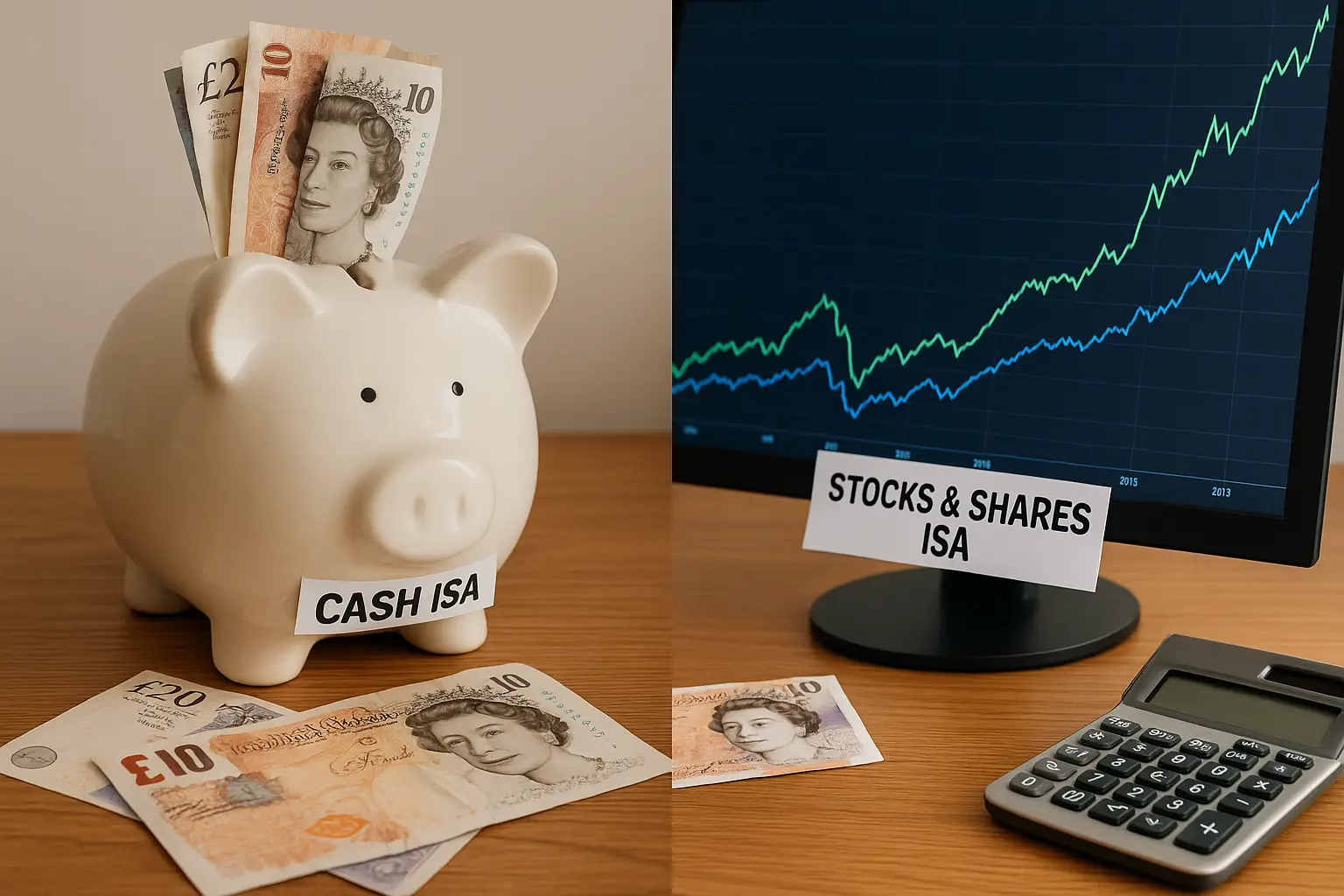

When comparing a stocks and shares ISA vs cash ISA, the right choice depends on your savings goals, risk tolerance and time horizon. Both are tax-efficient Individual Savings Accounts (ISAs) offered by HM Revenue & Customs (HMRC), allowing UK residents to save or invest up to £20,000 annually without paying tax on interest or gains. This guide breaks down the differences to help you decide between cash safety and potential stock market growth in 2025.
What is a cash ISA?
A cash ISA is essentially a tax-free savings account, similar to a standard savings account but with no tax on the interest earned. It suits those seeking stability and easy access to funds.
Key features and benefits
Cash ISAs come in types like easy-access, fixed-rate or notice accounts, protected by the Financial Services Compensation Scheme (FSCS) up to £85,000 per provider. Benefits include predictable returns and low risk, making them ideal for emergency funds. In 2024, about two-thirds of £103 billion invested in ISAs went into cash versions, highlighting their popularity for conservative savers (source: Moneyfactscompare).
Current interest rates (2025)
As of 2025, top easy-access cash ISAs offer around 4-5% AER, though rates fluctuate with the Bank of England base rate. Fixed-rate options might yield 4.5% for one year, but lock in your money. Always compare rates, as they lag behind inflation at times, eroding real value to 1-2% after adjustment.
Best for short-term savings
For goals under five years, like a house deposit, a cash ISA vs stocks and shares ISA favours the former due to capital protection. Withdrawals are straightforward, though some accounts penalise early access.
What is a stocks and shares ISA?
A stocks and shares ISA lets you invest in funds, shares, bonds or ETFs tax-free, with growth from market performance rather than interest. For more on basics, see our guide on what is a stocks and shares ISA.
Investment options and risks
Options range from low-risk bonds to high-growth stocks via platforms. Risks include market volatility; your investment can fall as well as rise, unlike cash ISAs. Diversify to mitigate, but no FSCS protection applies—only the Financial Ombudsman Scheme for provider disputes.
Potential returns vs volatility
Over the past 10 years, stocks and shares ISAs averaged 7-10% annual returns, outpacing cash’s 1-2% after inflation (source: MoneySavingExpert). However, volatility means short-term losses, like during 2022’s market dip.
Suitability for long-term goals
Ideal for retirement or goals over 10 years, where time smooths volatility. If you’re new, start with ready-made funds for simplicity.
Core differences: Cash ISA vs stocks and shares ISA
The main divide in stocks and shares ISA vs cash ISA lies in risk-reward balance, with cash offering security and stocks promising higher growth.
Risk and reward comparison
| Aspect | Cash ISA | Stocks & Shares ISA |
|---|---|---|
| Risk Level | Low (capital guaranteed) | Medium to High (market-dependent) |
| Average Returns (2025 est.) | 4-5% AER | 7-10% historical avg. |
| Protection | FSCS up to £85,000 | No capital protection |
| Fees | Minimal (0-1%) | 0.25-1% platform + fund fees |
This table illustrates cash vs stocks and shares ISA trade-offs; higher potential rewards come with greater uncertainty (source: Legal & General).
Tax implications
Both shield interest, dividends and capital gains from tax, within the £20,000 ISA allowance for 2025/26 (source: HMRC). No difference here, but stocks may generate more taxable events outside an ISA.
Accessibility and liquidity
Cash ISAs offer instant or short-notice access; stocks require selling investments, which could take days and incur losses if markets dip.
Tip: Assess your risk tolerance with a quick quiz from providers before choosing between cash ISA vs stocks and shares ISA. If markets scare you, stick to cash for peace of mind.
Lifetime and junior ISA variants
Specialised ISAs extend the cash vs stocks and shares ISA debate to life stages.
Cash vs stocks in Lifetime ISAs
Lifetime ISAs (LISAs) for 18-39-year-olds offer a 25% government bonus on up to £4,000 yearly contributions, max £1,000 bonus. Cash LISAs provide steady growth for first homes; stocks and shares LISAs boost retirement via investments, but penalties apply for non-qualifying withdrawals (source: OneFamily). Cash lifetime ISA vs stocks and shares lifetime ISA suits cautious buyers vs growth seekers.
Options for children’s savings
Junior ISAs (JISAs) allow £9,000 annually for under-18s, tax-free until maturity at 18. Junior cash ISAs offer safety; junior stocks and shares ISAs aim for higher long-term growth, like education funds (source: Forbes Advisor UK). Parents control until handover.
Which ISA should you choose?
Match your goals: short-term safety points to cash ISA; long-term wealth to stocks and shares. You can split the £20,000 allowance across types, holding both in the same tax year.
Factors based on your goals
- Emergency fund (1-3 years): Cash ISA for liquidity.
- Retirement (10+ years): Stocks and shares for compounding.
- Home purchase: LISA variant, cash if risk-averse.
Can you have multiple ISAs?
Yes, one of each type per tax year, but total contributions cap at £20,000. Transfers between providers are allowed without affecting allowance.
Top providers for 2025
For the best stocks and shares ISA options, compare low-fee platforms like Vanguard or Hargreaves Lansdown. This is general information, not financial advice—consult a professional.
Frequently asked questions
What is the difference between a cash ISA and a stocks and shares ISA?
The core distinction in cash ISA vs stocks and shares ISA is security versus growth potential. Cash ISAs earn fixed interest with guaranteed capital, protected by FSCS, ideal for short-term needs. Stocks and shares ISAs invest in markets for higher average returns of 7-10% over time but carry volatility risks, suiting long-term savers. Both offer tax-free benefits up to the ISA allowance, helping UK residents build wealth efficiently without HMRC deductions.
Which ISA is better for short-term savings?
For savings under five years, a cash ISA outperforms in stocks and shares ISA vs cash ISA comparisons due to its low risk and easy access. It preserves your principal against market dips, with current rates around 4-5%. Stocks and shares ISAs could lose value short-term, making them unsuitable unless you’re comfortable with potential temporary losses. Consider your timeline and liquidity needs before deciding.
Can I have both a cash ISA and a stocks and shares ISA?
Yes, you can hold both a cash ISA and a stocks and shares ISA in the same tax year, as long as total contributions stay within £20,000 for 2025/26. This diversification balances safety and growth, common for balanced portfolios. However, you can only open one new ISA per type annually, though transfers to better providers are flexible. Check HMRC rules to avoid over-contributing penalties.
What are the risks of a stocks and shares ISA?
Risks in a stocks and shares ISA include capital loss from market falls, unlike the guaranteed safety of cash ISAs. Volatility can lead to short-term declines, as seen in past recessions, though long-term recovery is typical with 7-10% averages. Fees and currency fluctuations add layers, but diversification reduces exposure. Always invest only what you can afford to lose, and review regularly for your risk profile.
How much can I invest in an ISA in 2025?
The ISA allowance for 2025/26 remains £20,000, covering cash, stocks and shares, Lifetime or Junior variants combined. This tax year runs from 6 April 2025 to 5 April 2026, per HMRC guidelines. Unused allowance doesn’t carry over, so plan contributions wisely. For families, Junior ISAs add £9,000 separately, enhancing child savings strategies.
Should I choose a cash lifetime ISA vs stocks and shares lifetime ISA?
A cash lifetime ISA vs stocks and shares lifetime ISA depends on your horizon: cash for near-term home buys with stable 25% bonus growth, stocks for retirement with higher potential via markets. Both qualify for the £1,000 annual bonus on £4,000 max, but early withdrawals incur 25% penalties. Stocks suit if you’re under 50 and tolerant of ups and downs, while cash minimises stress for first-time buyers. Evaluate with your age and goals.
Is a junior stocks and shares ISA vs cash ISA worth it for my child?
For children’s long-term savings, a junior stocks and shares ISA vs cash ISA offers superior growth potential at 7-10% historically, versus cash’s lower 4-5%. With £9,000 annual limit until age 18, stocks build a bigger nest egg tax-free, ideal for university or startup funds. However, parents must stomach market risks during the lock-in period. Start small and diversify for balanced family planning.