How to choose a washer dryer
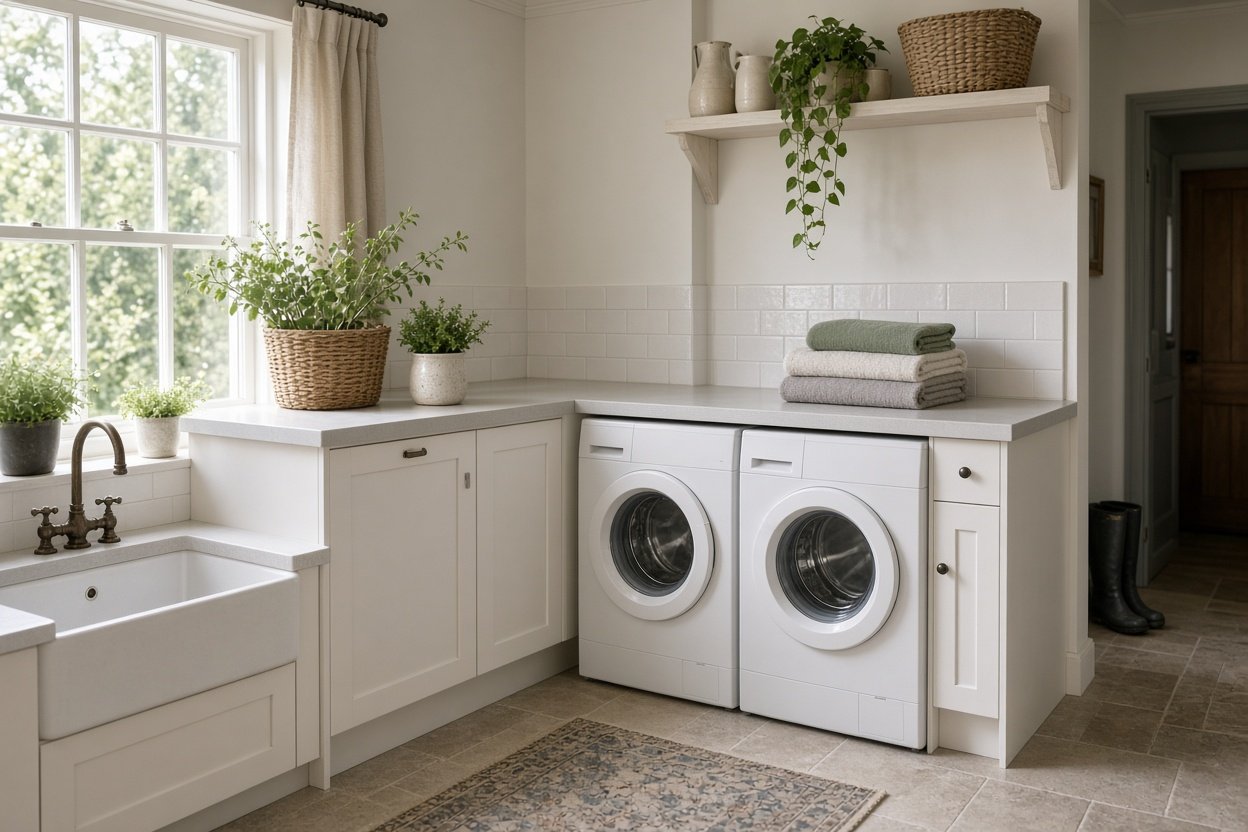
The best washer dryer for your home depends on four practical decisions: whether you need an integrated or freestanding appliance, how much laundry you wash, how often you dry it and whether one appliance is preferable to two. A washer dryer combines washing and drying in one machine, saving the floor space required by a separate washing machine and tumble dryer.
The most important specification is not the headline washing capacity alone. Compare the washing and drying capacities as separate figures. A machine described as 9kg may wash 9kg but dry only 5kg or 6kg. The drying capacity determines how much laundry can go through a complete wash-and-dry cycle without removing part of the load.
Washer dryer combo or separate appliances?
A washer dryer combo is a sensible choice when there is room for only one laundry appliance, particularly in a flat, small utility room or fitted kitchen. Which? describes the format as convenient when space is too limited for a separate tumble dryer and you do not want to rely on slower indoor drying.
The main compromise is throughput. The drum can usually wash more laundry than it can dry, so a full wash load may need to be split before drying. The appliance also cannot wash a second load while the first is drying. Which? reports that almost all washer dryers use water during drying because many systems condense moisture with water.
Where space allows, a separate washing machine and heat-pump tumble dryer is usually the stronger arrangement for frequent drying. Which? found lower drying running costs for a separate heat-pump tumble dryer than for the average washer dryer in its comparison. Two appliances also allow one load to wash while another dries.
| Choose a washer dryer if… |
Choose separate appliances if… |
| You have room for one laundry appliance only |
You have space for both a washing machine and tumble dryer |
| You want one appliance to move laundry from washing into drying |
You want to wash one load while drying another |
| Convenience and floor space matter most |
You dry clothes frequently or in large loads |
| You accept a lower drying capacity |
Lower drying running costs and higher throughput are priorities |
Integrated or freestanding washer dryer?
An integrated washer dryer is designed to fit behind a fitted kitchen cabinet door. It is the right type when the appliance needs to match a run of kitchen units. A freestanding washer dryer has its own visible front and is suitable for an exposed position, such as a utility room, garage or open kitchen space.
Integrated does not mean that every model will fit every cabinet. Measure the appliance space, the route into the room, the available depth and the position of the water, waste and power connections. Also account for the cabinet door and its hinges. Currys specifically advises careful measurement before buying an integrated appliance.
Freestanding models generally give you more flexibility when replacing the machine because they do not need to align with a cabinet door. Integrated models are preferable when the appearance of a fitted kitchen matters, but installation constraints should be resolved before comparing features or prices.
Washer dryer capacity: 7kg, 8kg, 9kg, 11kg or 12kg?
Currys suggests approximately 7–8kg washing and 4–5kg drying for one or two people; 9–10kg washing and 6kg drying for three or four people; and 11kg or more washing with 7kg or more drying for households of five or more.
| Household guide |
Approximate washing capacity |
Approximate drying capacity |
| One or two people |
7–8kg |
4–5kg |
| Three or four people |
9–10kg |
6kg |
| Five or more people |
11kg-plus |
7kg-plus |
These figures are useful starting points rather than strict rules. Your laundry habits matter just as much as the number of people in the household. Bulky bedding, frequent sportswear or several loads each week make the drying figure particularly important. A 9kg wash/5kg dry model cannot dry the full load that it can wash.
Currys advises filling the drum to about three-quarters for washing and about half full for drying, allowing air to circulate. This means that the usable drying load can be smaller than the specification suggests if clothes are bulky or absorbent. Prioritise drying capacity if you expect to machine-dry most loads.
Examples of washer dryers in the UK
The table shows models with published capacity and price information from UK retailers. It illustrates the range from compact and integrated appliances to larger 11kg and 12kg machines, rather than ranking drying performance.
| Model |
Retailer |
Type |
Wash/dry capacity |
Listed price |
| Bush WDSAA86W |
Argos |
Freestanding |
8kg/6kg |
From £339 |
| Hisense WD3S8043BB3 |
Argos |
Freestanding |
8kg/5kg |
£369 |
| Hotpoint BIWDHG861484UK |
Argos |
Integrated |
8kg/6kg |
From £499 |
| Samsung WD80TA046BE |
AO |
Freestanding |
8kg/5kg |
£364 |
| Samsung WD90DG6B85BEU1 |
AO |
Freestanding |
9kg/6kg |
Not stated in the comparison |
| Smeg WDI147D-2 |
AO |
Integrated |
7kg/4kg |
£799 |
| AEG L7WC84636BI |
John Lewis |
Integrated |
8kg/4kg |
£899 |
| Siemens IQ500 WK14D490GB |
John Lewis |
Integrated |
8kg/5kg |
£999 |
| Hisense WD3S8043BW3 |
Euronics |
Freestanding |
8kg/5kg |
£389 |
| Blomberg LRI1854111 |
Euronics |
Integrated |
8kg/5kg |
£589.99 |
| Hisense KitchenFit 5i WD5I1245BWR |
Currys |
Freestanding |
12kg/8kg |
Not stated in the comparison |
Retailer prices and availability change, and the listed price may depend on membership, promotion or delivery conditions. The table is therefore best used to compare capacities, appliance types and price bands at the time of research.
Condenser washer dryers and heat-pump technology
A condenser washer dryer collects moisture in a reservoir or drains it away, so it does not require external venting. That makes the format suitable for rooms without a vent opening. In practice, many washer dryers use water to condense moisture during drying, so a condenser design should not automatically be treated as the lowest-water or lowest-cost option.
Some larger washer dryers use heat-pump technology. Currys lists a 12kg wash/8kg dry Hisense KitchenFit model and a 12kg wash/8kg dry heat-pump version. Heat-pump technology is also common in separate tumble dryers, where Which? found lower drying running costs than for the average washer dryer in its comparison.
For a household that dries clothes only occasionally, the convenience of a washer dryer may matter more than the technology comparison. For frequent machine drying, examine the combined wash-and-dry energy information and compare the appliance with a separate heat-pump dryer.
Energy use and running costs
UK washer dryers use the A-to-G energy-label scale introduced for washing machines and washer dryers in March 2021. Ratings can be shown for washing only and for the combined washing-and-drying cycle, so read the complete-cycle information when assessing a machine that will regularly be used as a dryer.
Which? reports that washer dryers tested by its researchers cost more than £200 per year on average to wash and dry in its cited usage scenario. Its estimates give an indication of the difference between machine sizes: a typical 7kg wash/4kg dry model costs £166 per year on average, while an 11kg/6kg model costs £246 per year in the stated October 2026 energy-price scenario.
These figures are usage estimates rather than a fixed bill. Programme selection, load size, frequency, electricity prices and whether every load is dried will change the result. Air-drying some clothes can reduce machine use, while a higher spin speed can extract more water before the drying stage.
Spin speed, programmes and useful features
Currys states that spin speeds of 1,400–1,600rpm extract more water before drying. Spin speed is therefore worth comparing alongside drying capacity and energy information, especially if you want shorter or less intensive drying cycles.
Current washer dryers can include quick programmes, Wi-Fi connectivity, AI features, steam refresh, easy-iron cycles, drum-cleaning programmes, anti-allergy cycles and stain programmes. The useful choice depends on your routine:
- Quick programmes: useful for lightly soiled laundry that does not need a full-length cycle.
- Steam refresh and easy-iron cycles: useful for refreshing clothes or reducing creasing.
- Drum-cleaning programmes: support regular appliance maintenance.
- Anti-allergy and stain programmes: relevant when those specific washing requirements matter.
- Wi-Fi and AI features: worthwhile when remote control or automated programme selection will genuinely be used.
Do not allow a long feature list to distract from the basic purchase decision. Capacity, installation type, complete-cycle energy information and drying frequency affect the result more directly than optional connectivity.
Which washer dryer type suits your home?
For one or two people, a 7–8kg wash and 4–5kg dry machine is a reasonable starting point. Three- or four-person households can look towards 9–10kg washing and 6kg drying. Larger households may need 11kg or more washing capacity and at least 7kg drying capacity, although separate appliances become more attractive as drying demand increases.
Choose an integrated washer dryer when it must sit behind a fitted kitchen door, and choose freestanding when placement is flexible or the machine will be visible. Choose a condenser format where external venting is not available. If drying is frequent, compare heat-pump alternatives and the full wash-and-dry energy data rather than relying on the washing-only rating.
How to buy the right washer dryer
- Choose integrated or freestanding. Decide whether the machine must align with a cabinet door.
- Measure the installation. Include depth, access, connections and the cabinet-door arrangement.
- Set the capacity from your laundry pattern. Consider household size, bedding and drying frequency.
- Compare wash and dry figures separately. The larger washing figure is not the complete wash-and-dry load.
- Compare the combined energy information. Distinguish it from any washing-only rating.
- Check spin speed and genuinely useful programmes. A 1,400–1,600rpm spin can remove more water before drying.
- Compare with separate appliances. If two machines will fit and drying is frequent, a washing machine plus heat-pump tumble dryer may suit you better.
Frequently asked questions
Is a washer dryer in one worth it?
Yes, when floor space is limited, there is no suitable location for a separate tumble dryer or convenience is more important than maximum drying capacity. It is less compelling when you regularly dry large loads and have room for a separate heat-pump dryer.
Are washer dryers really worth it?
They are particularly worthwhile for smaller households and homes where two appliances will not fit. The case is weaker for households that dry full loads frequently because drying capacity is lower and running costs can be higher than with a separate heat-pump tumble dryer.
What is the downside of a washer/dryer combo?
The main disadvantages are a smaller drying capacity, potentially higher drying energy use and the inability to wash another load while the first is drying. Many models also use water to condense moisture during drying.
Which type of washer/dryer is best?
There is no single best type. Integrated is best for a fitted kitchen, while freestanding is more flexible when the machine can remain visible. For occasional drying, choose the capacity and installation type that fit your home. For frequent drying where space allows, separate appliances with a heat-pump tumble dryer are the stronger setup.