
How to open a fixed rate ISA: step-by-step application guide
A fixed rate ISA is a tax-free savings account that locks your money away for a set period in exchange for a guaranteed interest rate. If you’re wondering how to open a fixed rate ISA, this guide walks you through the process, from eligibility checks to funding your account. With the 2025/26 ISA allowance at £20,000, it’s an ideal way for UK residents to grow savings securely. Remember, this is general information and not personalised financial advice—consider consulting an advisor for your situation.
What is a fixed rate ISA and who is eligible?
The core appeal of a fixed rate ISA lies in its stability: you get a predetermined interest rate, known as AER (Annual Equivalent Rate), for the term, shielding you from market fluctuations. This makes it suitable for savers who won’t need access to their funds soon. Benefits include tax-free interest and protection up to £85,000 per person via the Financial Services Compensation Scheme (FSCS) if the provider fails.
Key features and benefits
Fixed rate ISAs are a type of cash ISA, allowing tax-free growth on interest earned. Terms typically range from one to five years, with rates like 4.27% AER for a one-year option as of October 2025 (source: MoneySavingExpert). Over 11 million ISAs are held in the UK, with cash versions comprising 60% of new subscriptions, highlighting their popularity for straightforward saving.
Eligibility criteria for UK residents
To open a fixed rate ISA, you must be 18 or older and a UK resident for tax purposes. Non-UK residents can transfer existing ISAs but cannot open new ones (source: GOV.UK). You’ll also need a National Insurance number and proof of identity.
- Age: 18+
- Residency: UK tax resident
- Annual limit: One ISA subscription per tax year (6 April to 5 April)
- No previous ISA breaches
Differences from variable rate ISAs
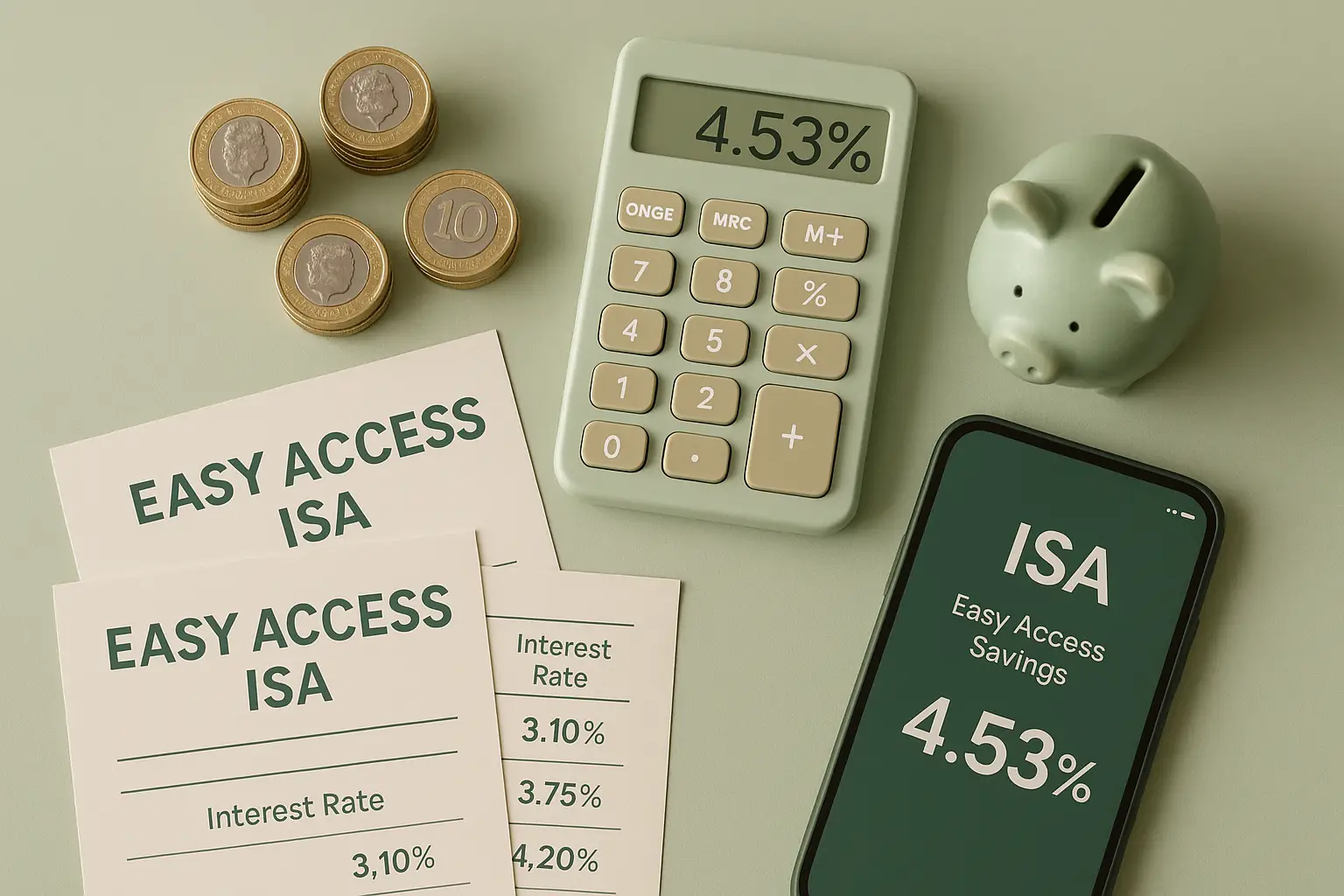
Unlike variable rate ISAs, where interest can change with market conditions, fixed rate versions guarantee your rate for the full term. This predictability suits conservative savers, though it means less flexibility. Variable options, like easy-access ISAs, allow withdrawals without penalty but often yield lower rates.
Tip: If you’re new to ISAs, start by learning what is a fixed rate ISA to ensure it fits your goals.
Choosing the right fixed rate ISA
Select based on your timeline and risk tolerance—longer terms often mean higher rates, but early access incurs penalties. Compare options from providers like NatWest, Nationwide, and HSBC to find the best fit without exceeding your £20,000 allowance.
Current top rates and providers
As of October 2025, top rates reach 4.27% AER for one-year terms. Providers such as Santander and OakNorth offer competitive deals. For specifics on fixed rate ISA rates, check independent comparisons.
| Provider | Rate (AER) | Term | Min Deposit |
|---|---|---|---|
| HSBC | 4.00% | 1 year | £500 |
| NatWest | 4.10% | 1 year | £500 |
| Nationwide | 4.15% | 2 years | £1 |
| Santander | 4.27% | 1 year | £500 |
Rates are variable and subject to change; always verify with the provider (data inspired by MoneySavingExpert, accessed October 2025).
Term lengths and penalties
Terms vary from one to five years, with penalties for early withdrawal often equalling 90-150 days’ interest. Choose a term matching your savings horizon to avoid fees.
Comparison of minimum deposits
Most require £500 minimum, like HSBC’s offering (source: HSBC UK), but some like Nationwide allow as little as £1. This flexibility helps beginners test the waters.
Step-by-step process to open a fixed rate ISA
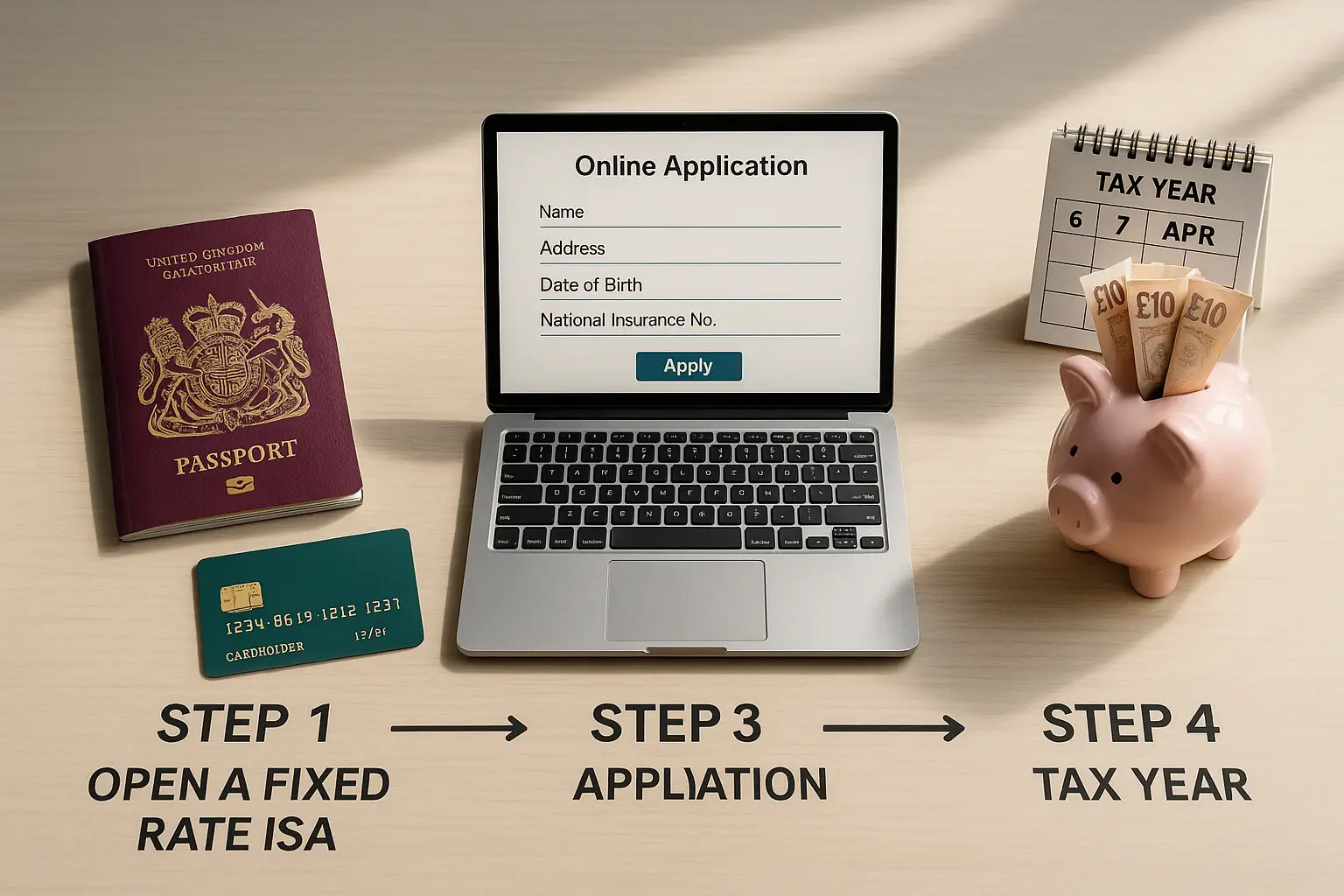
Opening takes 10-30 minutes online for most providers. Focus on authorised firms regulated by the FCA to ensure safety.
Gather required documents
Prepare your passport or driving licence for ID, a recent utility bill for address proof, and bank details for funding. If applying with NatWest, existing customers skip some steps for faster how to open a NatWest fixed rate ISA.
Select a provider and apply online
Research via comparison sites, then visit the provider’s site—e.g., Nationwide for how to open a Nationwide fixed rate ISA. Fill in personal details, declare eligibility, and agree to terms. Phone options exist for those less comfortable online.
Fund your account and confirm
Transfer up to £20,000 via bank transfer or debit card. Confirmation arrives by email; your money starts earning interest immediately. Track via the provider’s app.
- Check eligibility on GOV.UK.
- Compare rates.
- Apply and verify identity.
- Deposit funds.
- Receive confirmation.
Common mistakes to avoid and next steps
Avoid rushing without comparing rates or misunderstanding penalties, which could erode returns. After opening, review annually as rates evolve.
Tax implications
Interest is tax-free within the ISA wrapper, maximising growth. Exceeding the allowance triggers tax on excess interest. For details, visit GOV.UK.
Transferring existing ISAs
Transfer tax-free to a better fixed rate deal without closing your old account. Contact your new provider; it takes 5-15 days. Non-residents can initiate transfers for existing holdings.
Monitoring rates post-opening
Your rate is fixed, but shop around at term end. Use tools like MoneySavingExpert for updates. Link to our pillar page for the best fixed rate ISA options.
Frequently asked questions
What is a fixed rate ISA?
A fixed rate ISA is a cash savings account where the interest rate is guaranteed for a fixed period, typically 1-5 years, allowing tax-free growth. It’s ideal for those seeking stability over flexibility, with funds locked in to earn a set AER. Unlike stocks and shares ISAs, it carries no investment risk but lower potential returns. This product suits conservative savers planning for medium-term goals like a house deposit.
How much can I put in a fixed rate ISA?
You can contribute up to £20,000 in the 2025/26 tax year across all your ISAs, including fixed rate types. This allowance resets each 6 April, so plan contributions wisely to avoid wasting it. Splitting across multiple ISAs is allowed, as long as the total doesn’t exceed the limit. Remember, unused allowance doesn’t carry over, so maximise it if possible.
Can I withdraw money from a fixed rate ISA?
Withdrawals are possible but usually incur penalties, such as losing 90-150 days’ interest, to discourage early access. Some providers offer partial withdrawals with reduced fees, but full access without penalty is rare until maturity. Check terms beforehand, as rules vary by provider like Santander. For emergencies, consider an easy-access ISA instead to maintain liquidity.
What are the best fixed rate ISAs right now?
As of October 2025, top options include Santander at 4.27% AER for one year and Nationwide for longer terms around 4.15%. Rates fluctuate, so compare via independent sites for the latest. Factors like minimum deposits (£500 typical) and FSCS protection should influence your choice. Always verify current offers, as they can change daily based on market conditions.
Do I need to be a UK resident to open an ISA?
Yes, you must be a UK resident for tax purposes and aged 18 or over to open a new fixed rate ISA. Non-residents can manage or transfer existing ISAs but not subscribe to new ones. Crown employees abroad may qualify under exceptions. Confirm your status via HMRC to avoid invalidating your account.
Can I open multiple fixed rate ISAs in one tax year?
You can open multiple ISAs, but only one counts as your ‘subscription’ allowance of £20,000 per year—others must be transfers. This lets you diversify providers, like one with NatWest and another with HSBC. Track contributions carefully to stay within limits. Strategies include using one for short-term fixed and another for longer to optimise returns.
What happens if I need to withdraw early from a fixed rate ISA?
Early withdrawal typically triggers a penalty, often equivalent to several months’ interest, calculated on the amount withdrawn. For example, HSBC charges 150 days’ interest loss. Providers must give 14 days’ notice for processing, and some allow penalty-free access after a cooling-off period. Weigh this against needs; alternatives like easy-access ISAs avoid such risks but offer lower rates.